















Step-by-Step Guide to the Overhead Cable Extension
- Position a cable pulley at roughly chest height and attach a rope accessory.
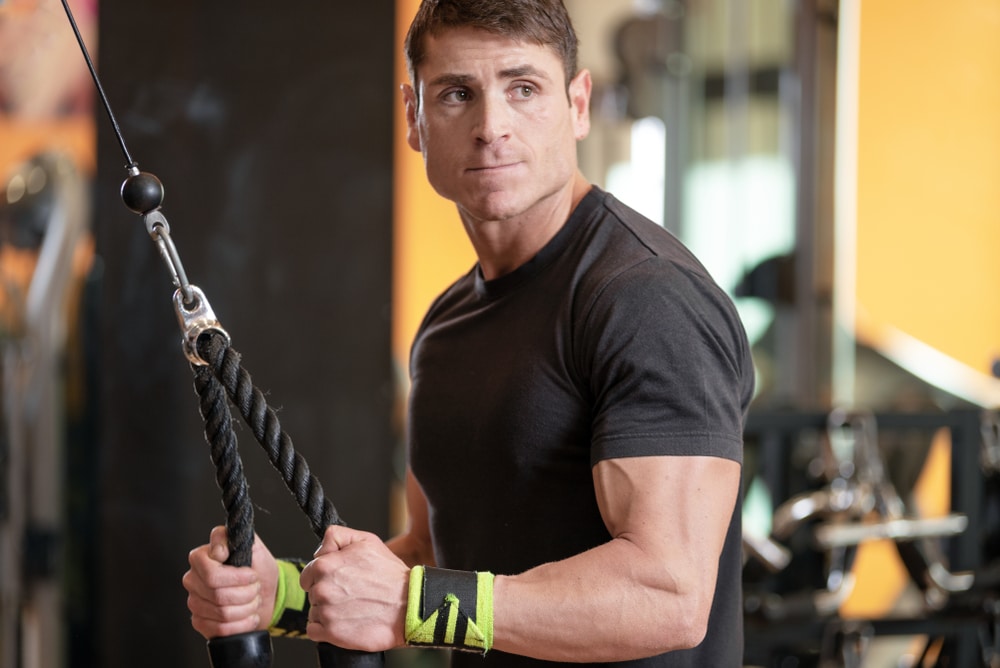
- Grasp the ends of the rope with a neutral grip, turn your body away from the machine, and raise your hands behind your head so your upper arms are positioned near your ears.
- Step forward into a staggered stance to create a stable base, then lean your torso forward at approximately a 45-degree angle.
- Allow the resistance of the cable to pull your hands back, lowering the weight until you feel a significant stretch in the triceps.
- Extend your arms forward by contracting your triceps until your elbows are locked out. Keep your upper arms relatively stationary throughout the movement, though slight natural movement is acceptable.
- Slowly return to the starting position under control, ensuring you feel the stretch again before beginning the next repetition.
Strategies for Maximizing Your Performance
- Avoid the urge to force your elbows into a narrow, restricted position. Instead, allow them to flare slightly to a width that feels natural and comfortable for your joints.
- Focus on a complete range of motion. Many lifters make the mistake of performing partial reps, which limits the muscle-building potential at both the top and bottom of the movement.
- If the rope attachment feels unstable or uncomfortable, consider using a V-bar. While it may slightly reduce the range of motion, it provides a more rigid grip that some lifters prefer for heavier loads.
- Don’t be afraid to adjust the height of the pulley. Small changes in the cable’s point of origin can significantly alter the feel of the exercise, so experiment to find your “sweet spot.”
- For a variation that increases stability and reduces the temptation to use momentum, try performing the movement from a kneeling position.
Why This Exercise Belongs in Your Routine
The cable overhead triceps extension is widely regarded as a premier accessory movement for arm development. It effectively targets all three heads of the triceps through an extensive range of motion and allows for precise, incremental increases in resistance. Because cable machines are standard in almost every gym, it is an exceptionally accessible exercise for consistent training.
This exercise is most effective when performed toward the end of a workout, following heavy compound pressing movements like the bench press or overhead press. A common and effective protocol is to perform 2 to 3 sets of 8 to 12 repetitions, resting for 2 to 3 minutes between sets. To maximize growth, aim to take each set close to, or occasionally to, the point of muscular failure.
Understanding the Muscles Targeted
This exercise is a powerhouse for triceps development because it engages the lateral, medial, and long heads of the triceps brachii.
What sets the overhead extension apart from other triceps movements—such as pressdowns or kickbacks—is its ability to emphasize the long head. Unlike the other two heads, the long head of the triceps originates at the scapula (shoulder blade) rather than the humerus. This means it is only fully stretched and prioritized when the arms are raised overhead, a position known as shoulder flexion.
Research supports this mechanical advantage. A 12-week study conducted at Ritsumeikan University compared the overhead extension to the traditional cable pushdown. The results showed that the arms performing overhead extensions experienced significantly more triceps growth—approximately 40% more overall and nearly 50% more growth specifically in the long head. While other triceps exercises are valuable, including an overhead variation is crucial for complete arm development.
Programming the Overhead Extension for Growth
To build well-rounded, “horseshoe” triceps, you should integrate this movement into a structured training plan that emphasizes progressive overload. By focusing on the unique stretch provided by the overhead position, you can address developmental gaps that standard pressing and pushdowns might leave behind.
Summary and Key Takeaways
The cable overhead triceps extension is an essential tool for anyone looking to maximize arm size and strength. By placing the triceps long head in a stretched position, it triggers superior hypertrophic results compared to many other isolation exercises. Focus on maintaining a controlled tempo, utilizing a full range of motion, and experimenting with pulley heights to find the most effective setup for your anatomy. Consistent application of these principles will ensure steady progress in your triceps development.
Strategic Chest Session Featuring Overhead Extensions
Barbell Bench Press: 3 sets of 4–6 reps
Incline Dumbbell Bench Press: 3 sets of 4–6 reps
Cable Overhead Triceps Extension: 3 sets of 8–12 reps
Lower Chest Cable Fly: 3 sets of 8–12 reps
Enhanced Push Routine with Cable Triceps Focus
Incline Barbell Bench Press: 3 sets of 4–6 reps
Barbell Overhead Press: 3 sets of 4–6 reps
Cable Overhead Triceps Extension: 3 sets of 8–12 reps
Cable Fly: 3 sets of 8–12 reps
Balanced Upper Body Training with Overhead Triceps Extensions
Dumbbell Bench Press: 3 sets of 4–6 reps
Pull-up: 3 sets of 4–6 reps
Cable Overhead Triceps Extension: 3 sets of 8–12 reps
Barbell Curl: 3 sets of 8–12 reps
Dumbbell Lateral Raise: 3 sets of 8–12 reps
To maximize results, the cable overhead triceps extension is typically programmed toward the conclusion of a chest, push, or general upper-body workout. This placement is strategic; it follows your heavy compound pressing movements, which establish the foundation of your strength training.
While compound presses engage the triceps, they often fail to provide the targeted stimulus required for peak hypertrophy, particularly for the long head of the triceps. Incorporating overhead extensions ensures this specific muscle head is fully challenged, leading to more complete arm development. For most lifters, a volume of 2–3 sets consisting of 8–12 reps is ideal. However, you can adjust your rep ranges to 6–8 or 12–15 depending on your goals. It is worth noting that while some believe triceps require low reps due to their fiber type, current fitness research suggests they respond well to a variety of rep ranges.
Optimizing Cable Height and Body Positioning
When setting up the cable machine, you generally have two effective configurations:
- The Low Setting: Position the pulley between your hips and the floor. Stand upright and extend your arms toward the ceiling.
- The Mid-High Setting: Position the pulley between your hip and chest height. Lean forward slightly and extend your arms at approximately a 45-degree angle.
There is often debate among fitness enthusiasts regarding which height is “superior” or “safer,” but the reality is that your triceps will respond to the tension regardless of the specific pulley height. The choice should be dictated by your personal comfort and how stable you feel during the movement.
As you progress to heavier loads, you may find that a forward lean becomes a physical necessity to prevent the weight from pulling you off balance. For advanced lifters handling significant weight, a kneeling variation can be highly effective. By kneeling on a pad and facing away from the machine with the cable set at waist height, you can brace your torso more effectively than in a standing position, allowing for greater focus on the triceps themselves.
Selecting the Best Attachment for Your Setup
The attachment you choose can significantly impact the “feel” and range of motion of the exercise:
The Rope Attachment: This is the most popular choice for good reason. It allows for a natural wrist position and offers a slightly greater range of motion at the peak of the contraction. It does, however, require a bit more grip stability as the weight increases.
The V-Bar: This attachment provides a more rigid and stable platform, which some lifters prefer when moving heavy weights. While some find it less forgiving on the wrists, many find it more secure than the rope.
Straight Bars or EZ-Bars: These are options, but they often force the wrists and elbows into fixed positions that some individuals find uncomfortable or irritating over time.
Unilateral Training: If you prefer to focus on one arm at a time to correct muscle imbalances, you can perform the movement without a handle by gripping the cable end directly. Many lifters find this the most comfortable way to train, as it allows the arm to follow its most natural path of motion without being restricted by a bar or rope.
Summary of Key Takeaways
The cable overhead triceps extension is a premier isolation movement for targeting the long head of the triceps, which is often underserved by standard pressing movements. By placing this exercise after your heavy compound lifts and selecting a cable height and attachment that maximizes your stability and comfort, you can ensure consistent growth and strength gains. Whether you prefer standing or kneeling, the key is maintaining a steady torso and a full range of motion to provide the triceps with the stimulus they need for optimal development.
While some athletes attempt to train both arms simultaneously during overhead extensions, this approach is often less effective for the average trainee. Working both arms at once typically increases the time required for the set, reduces overall stability—which limits the amount of weight you can safely handle—and often results in an awkward, uncomfortable grip on the cable attachment. Focusing on one arm at a time allows for better concentration and higher intensity.
Comparing Cable and Dumbbell Overhead Triceps Extensions
The most significant distinction between using a cable versus a dumbbell for overhead extensions is the resistance profile. This concept refers to how the level of difficulty fluctuates throughout the movement’s range of motion.
When utilizing a dumbbell, the triceps experience the highest level of tension at the bottom of the repetition, where the muscle is fully stretched behind the head. However, as you extend your arm toward the ceiling, the mechanical advantage shifts. During the final quarter of the movement, the tension nearly vanishes because the weight is supported primarily by the bones of the arm rather than the muscle. While the weighted stretch at the bottom is a powerful stimulus for hypertrophy, the lack of resistance at the top is a missed opportunity for further growth.
In contrast, a cable machine provides constant, unwavering tension throughout the entire exercise. Because the cable pulls against the muscle from the start of the rep to the very end, the triceps are forced to work harder for a longer duration. Generally, maintaining high levels of mechanical tension through a full range of motion leads to superior muscle development over time.
Beyond the physics of resistance, the cable overhead extension offers several logistical benefits:
- Simplified Setup: Transitioning into the starting position is much easier with a cable. Maneuvering heavy dumbbells behind the head can be cumbersome and risky, especially as you get stronger and move into heavier weight brackets.
- Joint Comfort: The cable allows for a more natural path of motion, which is typically much easier on the wrists. Dumbbells often force the hands into a rigid, awkward angle that can cause discomfort under heavy loads.
- Enhanced Safety: Using a cable eliminates the inherent risk of accidentally dropping a heavy weight on your head or neck during a difficult set.
Complementary Triceps Movements
To build well-rounded arm strength, it is helpful to incorporate a variety of movements that target the different heads of the triceps. While the overhead extension is excellent for targeting the long head, adding press-downs or close-grip presses can ensure total muscle development.
Final Summary: While the dumbbell overhead extension remains a viable tool for arm training, the cable version is often the superior choice for those looking to maximize muscle growth. By providing consistent tension, better safety, and improved joint alignment, cables allow for a more effective and sustainable training experience. Prioritizing movements that maintain tension through the entire range of motion is a foundational strategy for long-term physique progress.