















Understanding the Dumbbell Chest Fly
The dumbbell fly is a targeted isolation movement designed to build the pectoral muscles while lying on a flat bench. Unlike compound pressing movements, this exercise involves moving the weights in a broad, sweeping arc, focusing the tension almost exclusively on the chest. This makes it a highly effective tool for bodybuilders and fitness enthusiasts who want to accumulate chest volume even after their triceps and shoulders have been fatigued by heavy pressing.
One of the primary advantages of the dumbbell fly is the significant stretch it places on the pectoral fibers at the bottom of the movement. Current exercise science suggests that training a muscle through a long range of motion, particularly in a lengthened state, is a powerful driver for hypertrophy. By emphasizing this “deep stretch” phase, the fly complements standard bench pressing to ensure more complete muscle development.
Step-by-Step Execution Guide
- Begin by sitting on the edge of a flat bench. Place a pair of dumbbells vertically on your thighs. As you lie back, use your knees to help kick the weights toward your chest. Carefully roll into a flat position so the dumbbells are held at the sides of your torso.
- Extend your arms directly over your chest. Turn your wrists so your palms are facing each other. Maintain a slight, fixed bend in your elbows—this “soft elbow” position protects the joint and ensures the tension remains on the chest throughout the set.
- Slowly lower the weights out to your sides in a wide, controlled arc. Imagine you are trying to hug a large tree; the path should be circular rather than a straight line.
- Continue the descent until you feel a comfortable yet deep stretch across your pectoral muscles. Be mindful not to overextend beyond your natural range of motion.
- Contract your chest to pull the dumbbells back toward the starting position. Stop when the weights are roughly 6 to 12 inches apart to maintain constant muscular engagement.
- Once the set is finished, you can safely bring the dumbbells back to your chest and then to the floor, or bring your knees up to meet the weights and use the momentum to roll back into a seated position. This controlled transition is generally safer for both your shoulders and the gym equipment.
Pro Tips for Better Results and Safety
- Maintain a stable upper back by retracting your shoulder blades and pulling them down toward your hips. A helpful cue is to imagine you are squeezing a small object between your shoulder blades and trying to tuck it into your back pockets.
- Avoid the “clink.” Touching or clashing the dumbbells at the peak of the movement removes the resistance from the chest. By stopping just short of the center, you keep the pectorals under continuous tension.
- Listen to your joints. While the goal is to achieve a deep stretch, you should never experience sharp pain or pinching in the shoulder. If you feel discomfort, reduce the range of motion or increase the bend in your elbows slightly.
- Prioritize tempo and control. Avoid the temptation to bounce the weights out of the bottom position. A brief pause at the point of maximum stretch ensures that your muscles, rather than momentum, are doing the work.
- Keep your lower body anchored. Your feet should remain flat on the ground and your glutes firmly on the bench to provide a stable base for the lift.
Integrating the Dumbbell Fly into Your Program
Because the dumbbell fly is an isolation exercise, it is best performed after your heavy compound lifts, such as the barbell or incline bench press. It fits perfectly into any training split that targets the upper body, including push days, chest-and-back sessions, or dedicated chest workouts.
To maximize muscle growth without overtaxing the shoulder joints, aim for moderate volume. Most lifters find success with 2 to 3 sets of 8 to 12 repetitions. While you can occasionally go heavier (8 to 10 reps), avoid very low-rep, high-weight sets with this specific movement. Using excessive weight often leads to technical breakdown, shifting the load onto the bicep tendons and shoulders, which increases the risk of injury and reduces the effectiveness for the chest.
A well-rounded upper-body session might look like this:
- Barbell Bench Press: 3 sets of 4–6 reps
- Dumbbell Chest Fly: 3 sets of 8–12 reps
- Cable Triceps Pushdowns: 3 sets of 8–12 reps
- EZ-Bar Curls: 3 sets of 8–12 reps
- Side Lateral Raises: 3 sets of 8–12 reps
Is the Dumbbell Fly Necessary for You?
The value of the dumbbell fly often depends on your training experience. For those in their first year of lifting, the most efficient way to build a significant physique is to focus on heavy, progressive compound movements. Mastering the flat, incline, and dumbbell press will provide the vast majority of your chest development during this phase.
For beginners, isolation exercises like the fly are often an unnecessary addition that can interfere with recovery from the more taxing “big lifts.” However, as you move into the intermediate and advanced stages of training, adding isolation work becomes a vital strategy for overcoming plateaus and adding detail to the chest by focusing on the stretched position that compound presses might not fully emphasize.
Key Takeaways
The dumbbell fly is a classic isolation exercise that excels at stretching the pectoral muscles and adding high-quality volume to a chest workout. By focusing on a controlled arc, maintaining a slight elbow bend, and prioritizing the mind-muscle connection over heavy weight, you can safely enhance chest hypertrophy. While beginners should focus on foundational compound presses, more experienced lifters can use the fly as a strategic tool to refine their physique and ensure their chest development doesn’t stall.
Reaching the intermediate stage of training—typically after about a year of dedicated lifting—is the point where the dumbbell fly becomes a valuable addition to your routine. At this level, muscle growth often requires a more specific stimulus than compound pressing alone can provide.
During traditional pressing movements, your pectorals work alongside smaller muscle groups like the triceps and anterior deltoids. Because the chest is a larger, more powerful muscle group, it often outlasts these smaller supporting muscles. Consequently, your shoulders or arms might reach failure while your chest still has the capacity for more work.
The dumbbell fly serves as an effective isolation tool for this specific problem. It allows you to continue challenging the chest muscles without being limited by triceps or shoulder fatigue, ensuring you achieve the necessary volume for hypertrophy.
Maximizing Pectoral Engagement During the Fly
If you find it difficult to feel your chest working despite using correct technique, a simple activation drill can help establish a better mind-muscle connection. This drill is highly effective when performed as a warm-up before your main sets:
- Stand upright and place your left hand on your right pectoral muscle, then extend your right arm out to your side.
- With a minor bend in your elbow, slowly sweep your right arm across the front of your body in a broad arc, mimicking the motion of a fly.
- Use your left hand to feel the pectoral muscle contract as it pulls the upper arm toward your midline.
- Perform 10 to 15 controlled repetitions, then repeat the process on the other side.
When you move to the bench, maintain a stable base by retracting your shoulder blades and pulling them slightly downward. Start with very light weights and attempt to replicate the sensation from the standing drill. Focus on the chest pulling the arms together rather than just moving the weights from point A to point B. If the sensation fades as you increase the weight, return to the activation drill briefly to recalibrate.
The Myth of Squeezing at the Top of the Rep
Common lifting advice often suggests “squeezing” the dumbbells together at the top of the movement to achieve a peak contraction. While this sounds logical, it is mechanically ineffective for muscle growth.
At the highest point of a dumbbell fly, your arms are vertical and the weights are stacked directly over your shoulder joints. In this position, gravity pulls the weight straight down through your bones, meaning your skeleton is supporting the load rather than your muscles. This is actually the easiest part of the movement, providing virtually no resistance to the chest.
To keep the pectorals under constant tension, the focus should be on the eccentric (lowering) phase and the deep stretch at the bottom, where the chest is forced to work the hardest. To maintain this tension, stop each repetition when your hands are roughly 6 to 12 inches apart at the top. This prevents the muscles from “resting” between reps and keeps the stimulus consistent.
Comparing Dumbbell Flyes to Cables and Machines
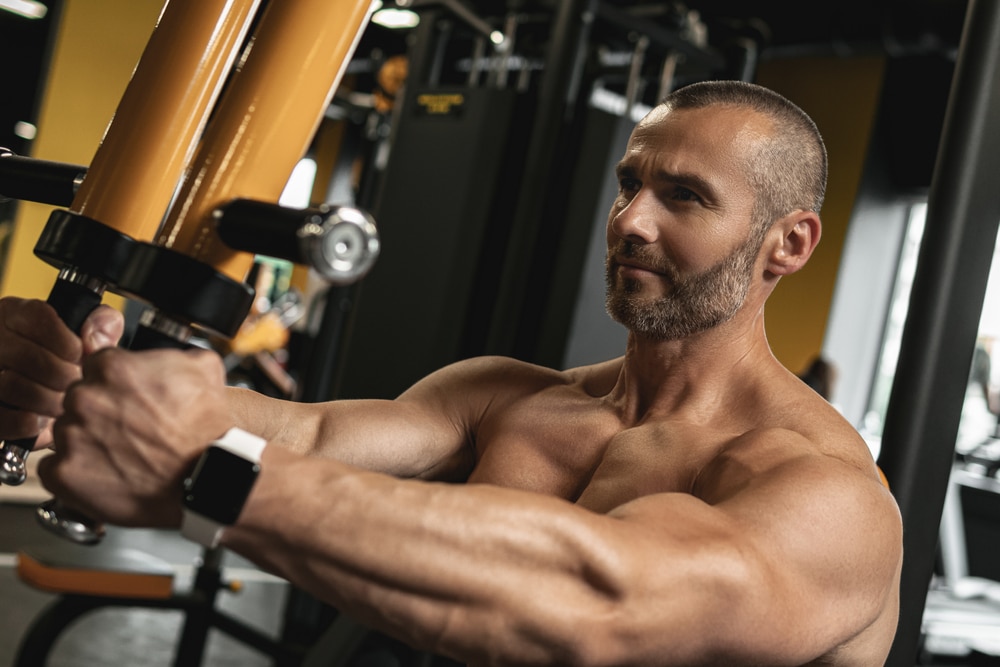
When comparing the dumbbell fly to cable variations or the pec deck machine, the latter two are often superior for maintaining tension through the entire range of motion. However, this doesn’t mean the dumbbell version is obsolete.
The primary benefit of the dumbbell fly is the significant load it places on the chest in the lengthened (stretched) position, which is a powerful driver for muscle hypertrophy. Much like a squat, which is hardest at the bottom and easiest at the top, the dumbbell fly focuses its intensity where it matters most. It remains a practical and effective choice if your gym’s cable machines are occupied or if you prefer the feel of free weights.
Cables and machines also have potential downsides. Cable flyes can lead to excessive body momentum if not controlled, and the fixed path of a pec deck may feel restrictive for some users.
Regarding bench angles:
- Flat Bench: The standard choice for overall chest development.
- Incline Bench: A 30- to 45-degree angle shifts the emphasis to the upper pectorals. Be careful not to exceed this angle, as the front deltoids will begin to take over the movement.
- Decline Bench: Generally unnecessary, as the setup is cumbersome and offers no distinct advantage over flat or incline versions.
Summary of Effective Fly Training
The dumbbell fly is a highly effective tool for intermediate lifters who need to add targeted volume to their chest training. To get the most out of the exercise, prioritize the stretch at the bottom, maintain tension by stopping before the weights touch at the top, and use activation drills to ensure your pectorals are doing the work. Whether you use a flat or incline bench, focusing on control and mind-muscle connection will lead to better results than simply chasing heavier weights.