










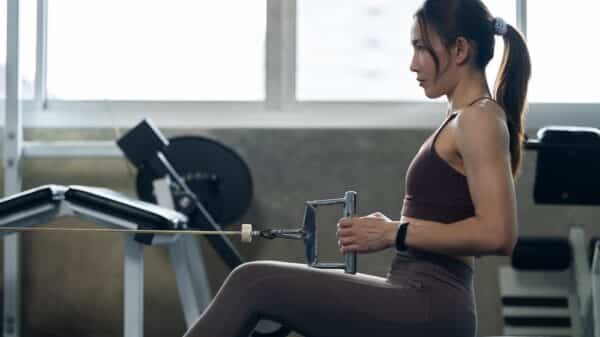



Integrating chest training into a fitness routine offers several distinct advantages for women:
- Optimized Body Composition: When you are in a calorie deficit to lose weight, your body may break down muscle tissue for energy. Strengthening your chest signals your body to maintain muscle mass, ensuring that the weight you lose comes primarily from body fat.
- Balanced Physical Development: Focusing only on the back, shoulders, or arms can lead to an uneven appearance. Training the pectoral muscles ensures your upper body looks proportional and symmetrical.
- Enhanced Aesthetic Support: While exercise cannot alter breast tissue itself, developing the underlying pectoral muscles can provide a firmer foundation, often creating a more toned and lifted appearance.
- Functional Strength for Daily Life: The chest muscles are vital for any “pushing” motion. Stronger pectorals make it easier to perform routine tasks, such as opening heavy doors, rearranging furniture, or pushing yourself up from the floor.
Many women avoid chest-specific workouts due to the misconception that it will lead to a “bulky” or overly masculine frame. However, building significant muscle mass requires a specific combination of high-calorie intake and years of intense, specialized training. For the average trainee, chest exercises simply result in a stronger, more defined upper body.
Furthermore, most chest-centric movements also engage the triceps. This is a significant benefit for those looking to develop lean, athletic arms, as compound presses and push-ups are highly effective at targeting the back of the arms.
Essential Guidelines for Female Chest Training
- Effective chest training focuses on fundamental compound movements, such as push-ups and various bench press variations, which allow for a full range of motion and consistent progression.
- Building an “oversized” chest does not happen by accident; it takes dedicated effort and a significant caloric surplus, so women can train these muscles without fear of becoming bulky.
- For most fitness goals, one focused chest session per week is sufficient, particularly if your program already includes other upper-body pushing exercises on different days.
The Most Effective Movements for Improving Chest Strength and Tone
The best chest exercises for women are compound movements. These exercises engage multiple joints and muscle groups, allowing you to move heavier loads and apply “progressive overload”—the process of gradually increasing weight or repetitions to drive muscle growth and strength gains over time.
Anatomically, the chest consists of the pectoralis major and the pectoralis minor. The pectoralis major is the larger muscle responsible for moving the arms across and in front of the body. The pectoralis minor is situated beneath it, helping to stabilize the shoulder blade. Because most pressing movements activate both muscles effectively, there is rarely a need to attempt to isolate the smaller pectoralis minor with specialized movements.
When selecting exercises, it is important to distinguish between high-value movements and “gimmick” exercises often seen on social media. Movements like the standing dumbbell squeeze press, the Svend press, or stability ball push-ups often lack the stability and mechanical tension required to effectively stimulate the muscle. Instead, prioritizing stable, high-tension exercises that allow for easy weight increments will yield more consistent results.
Final Summary and Key Takeaways
Training the chest is a vital component of a well-rounded fitness program for women. By focusing on heavy, compound movements and avoiding low-value fad exercises, you can improve your functional strength, support your body composition goals, and develop a balanced, athletic physique. Remember that consistency and progressive overload—slowly increasing the challenge to your muscles—are the most important factors in seeing long-term improvements in both strength and muscle definition.
Developing a strong, well-defined chest doesn’t require an endless variety of movements. Instead, the most effective approach focuses on a small selection of high-quality exercises that allow for progressive overload—the process of gradually increasing the weight or resistance used over time. By prioritizing exercises that engage the maximum amount of muscle fiber in every repetition, you can achieve better results with a more streamlined routine.
The following list includes a mix of bodyweight, barbell, dumbbell, and machine-based movements. This variety ensures that whether you are training in a fully equipped gym or at home, you can find the right tools to build upper-body strength and improve your physique according to your personal preferences.
1. The Traditional Push-Up
The push-up remains a fundamental chest exercise for women because it facilitates a complete range of motion without requiring any special equipment. Its versatility makes it suitable for all fitness levels, as the difficulty can be easily adjusted to match your current strength. Beyond the pectoral muscles, it also engages the shoulders, triceps, and core.
How to perform it:
- Assume a high plank position with your hands placed slightly wider than your shoulders.
- Maintain a rigid torso as you lower your chest toward the ground by bending your elbows.
- Push through your palms to return to the top, fully extending your arms.
Expert Tip: Focus on maintaining a tight core to keep your body in a straight line from your head to your heels. Allowing your hips to sag or pike upward reduces the effectiveness of the movement and makes it harder to maintain proper control.
2. Modified Knee Push-Ups
For those who are currently building the strength necessary for full push-ups, the knee variation is an excellent alternative. By placing your knees on the floor, you reduce the total amount of body weight your upper body must lift. This allows you to focus on proper form and muscle contraction. Once you can comfortably complete 10 or more repetitions in this position, you will likely have the foundational strength to transition to standard push-ups.
How to perform it:
- Start on all fours with your hands positioned just outside shoulder-width.
- Walk your hands forward and lower your hips until there is a straight line from your head down to your knees.
- Lower your chest toward the floor with control.
- Press back up to the starting position.
Expert Tip: To improve stability when starting out, keep your toes tucked and touching the floor. As you become more confident and stronger, you can lift your feet off the ground to increase the balance challenge.
3. Standard Barbell Bench Press
The barbell bench press is often considered the gold standard for chest development. Because the barbell provides more stability than dumbbells, it generally allows you to lift heavier loads. This makes it an ideal choice for women looking to gain strength quickly, as it is much easier to track and implement progressive weight increases over time.
How to perform it:
- Lie flat on the bench and grip the bar with hands slightly wider than shoulder-width apart.
- Retract your shoulder blades (pulling them down and together) and maintain a natural, slight arch in your lower back.
- Carefully unrack the weight and lower the bar until it lightly touches your mid-chest.
- Drive the bar back up to the starting position until your arms are straight.
Expert Tip: Avoid the temptation to bounce the bar off your chest to gain momentum. Lowering the weight slowly and under total control ensures the muscles are doing the work and helps protect your ribcage and joints from unnecessary impact.
4. Incline Barbell Press
The incline version of the barbell press shifts the focus higher up on the pectoral muscles. By training on an inclined surface, you target the clavicular head of the chest, which helps create a more balanced and “full” look in the upper torso. It provides the same stability and loading benefits as the flat bench press but with a specific emphasis on the upper chest.
How to perform it:
- Set yourself on an incline bench and grasp the bar with a grip slightly wider than shoulder-width.
- Pull your shoulder blades together to create a stable base and maintain a slight arch in your back.
- Unrack the bar and lower it toward your upper chest, just below the collarbone.
- Press the weight back up forcefully to the start.
Expert Tip: To keep your shoulders safe, avoid flaring your elbows out wide. Instead, keep them tucked at a roughly 45-degree angle (about 6 to 8 inches from your sides) during the descent.
5. Flat Dumbbell Bench Press
Using dumbbells for the bench press offers a unique benefit: each side of the body must work independently. This is excellent for identifying and correcting strength imbalances. Furthermore, dumbbells allow for a more customizable range of motion, letting you rotate your wrists or adjust your arm path to find the most comfortable and effective position for your specific joint anatomy.
How to perform it:
- Sit on the edge of a flat bench with a dumbbell in each hand, then lie back while bringing the weights to your chest.
- Press the dumbbells toward the ceiling until your arms are fully extended.
- Lower the weights slowly until they are level with your chest, feeling a stretch in the pectorals.
- Push the weights back up to the starting point.
Takeaway: Building a stronger chest is about quality over quantity. By selecting a few of these foundational movements—whether they are bodyweight-based for convenience or heavy-weight-based for maximum strength—and focusing on consistent progression and proper form, you can effectively reach your fitness goals. Incorporating both flat and incline movements will ensure well-rounded development for your upper body.
The dumbbell flat bench press is a highly effective alternative for those who find the traditional barbell version uncomfortable or restrictive. By using independent weights, you allow for a more natural range of motion that can be gentler on the shoulder joints while still providing a significant stimulus for muscle growth.
Flat Dumbbell Bench Press for Balanced Strength
This exercise allows each side of the body to work independently, which helps identify and correct strength imbalances. It is a fundamental movement for building the mid-chest, shoulders, and triceps.
Execution:
- Position yourself on a flat bench while holding a dumbbell in each hand, keeping them near the sides of your chest.
- Drive the weights upward until your arms reach full extension.
- Control the descent as you return the dumbbells to the starting position.
Professional Insight: To maximize stability and protect your joints, keep your shoulder blades retracted and depressed—pinched together and pulled toward your glutes—throughout the entire set. This creates a solid foundation and keeps the tension on the pectoral muscles rather than the delicate structures of the shoulder.
Incline Dumbbell Press for Upper Chest Definition
To create a well-rounded physique, the incline dumbbell bench press is essential. This variation specifically targets the upper portion of the pectorals while continuing to challenge the anterior deltoids and triceps through a deep range of motion.
Execution:
- Set an adjustable bench to a modest incline, typically between 30 and 45 degrees.
- Sit back with a dumbbell in each hand, starting with the weights positioned near your upper chest.
- Press the weights vertically until your elbows are straight.
- Lower the weights under control back to the starting point.
Professional Insight: Avoid using an excessively steep incline. A 30-to-45-degree angle is the “sweet spot” that emphasizes the upper chest; going higher often shifts the workload too heavily onto the shoulders, essentially turning the movement into an overhead press.
Close-Grip Barbell Bench Press for Triceps and Chest
The close-grip barbell bench press is a powerful compound movement that serves a dual purpose: it builds the chest while placing a much higher demand on the triceps. This makes it an efficient addition to any routine focused on upper body strength and toning.
Execution:
- Lie on the bench and grasp the barbell with a grip that is shoulder-width or slightly narrower.
- Maintain a slight arch in your lower back and keep your shoulder blades tucked together.
- Unrack the bar and lower it smoothly to the center of your chest.
- Forcefully press the bar back up to the top.
Professional Insight: Be cautious not to bring your hands too close together. A grip that is significantly narrower than shoulder-width does not necessarily increase tricep activation but can significantly increase the strain on your wrists and reduce your stability during the lift.
Dumbbell Pullovers for Enhanced Muscle Recruitment
The dumbbell pullover is a unique addition to a chest routine because it moves the muscles through a different plane of motion than traditional pressing. It is often used to add variety and can be a joint-friendly way to finish a workout.
Execution:
- Lie on a bench, holding a single dumbbell with both hands directly above your chest.
- Maintaining a very slight bend in the elbows, slowly lower the weight behind your head until you feel a stretch in your chest and lats.
- Pull the weight back up to the starting position over your chest.
Professional Insight: This exercise can be performed by lying lengthwise along the bench or by lying perpendicular to it with only your upper back supported. Experiment with both styles to determine which offers a better stretch and more comfort for your shoulders.
Machine Chest Press for Safe Muscle Fatigue
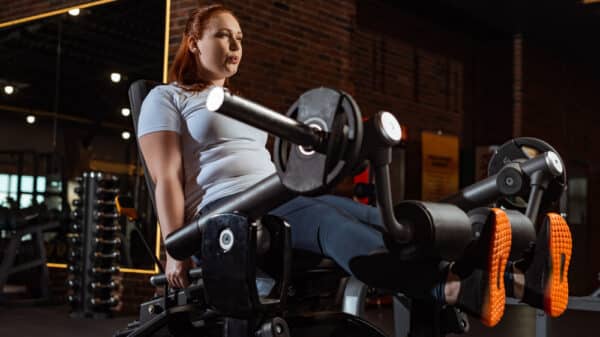
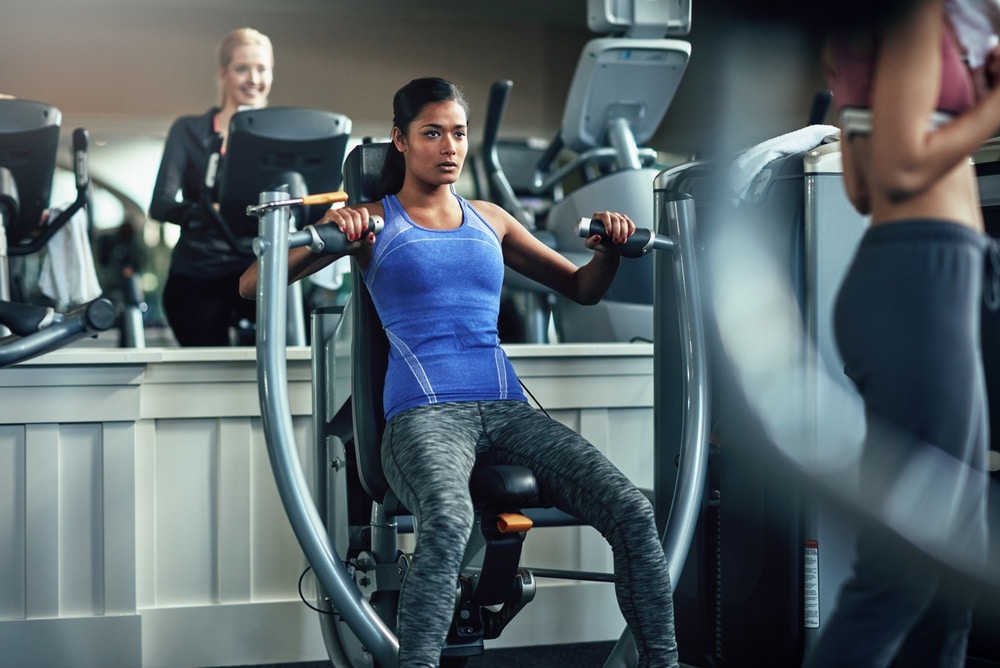
The machine chest press is an excellent tool for both beginners and advanced lifters. Because the machine dictates the path of the weight, you don’t need to worry about balancing the load, allowing you to focus entirely on pushing your muscles to the limit safely.
Execution:
- Adjust the seat height so that the handles are level with the middle of your chest.
- Choose either a horizontal or vertical grip, depending on what feels most natural.
- Press the handles forward until your arms are fully extended.
- Slowly return to the start, ensuring the weights don’t slam down.
Professional Insight: To keep the target muscles under constant tension, avoid letting the weight stack touch the bottom between repetitions. Maintaining that “active” state throughout the set will lead to better muscle engagement and growth.
Bodyweight and Assisted Dips for Pectoral Development
Dips are a high-value bodyweight movement that targets the lower chest and triceps. By altering your body angle, you can shift the focus between the chest and the arms, making it a versatile finishing move for any upper-body session.
Execution:
- Using parallel bars or an assisted dip machine, support your weight with your arms fully extended.
- Lower your body by bending the elbows until your upper arms are roughly parallel to the ground.
- Push yourself back up to the starting position.
Professional Insight: Your torso angle dictates the muscle focus. To emphasize the chest, lean your upper body slightly forward as you descend. Staying perfectly upright shifts the majority of the work to the triceps and may cause unnecessary stress on the front of the shoulder.
Summary of Best Practices for Chest Training
Building a strong, functional chest requires a mix of compound movements that target the muscles from various angles. By incorporating a variety of dumbbell, barbell, and machine exercises, you can ensure balanced development while protecting your joints. Remember that form is paramount; focusing on shoulder blade stability and controlled eccentric movements (the lowering phase) will produce better results than simply moving heavy weights. Whether you are using bodyweight dips or heavy dumbbell presses, consistency and proper technique are the keys to long-term progress.
11. Cable Machine Chest Fly
The cable fly is an exceptional isolation movement designed to target the pectoral muscles specifically. By using cables, you can continue to challenge your chest even after your secondary movers, such as the triceps and anterior deltoids, have become fatigued from heavy pressing movements. This makes it an ideal “finisher” or accessory lift for maximizing muscle engagement.
Step-by-Step Instructions:
- Adjust the cable pulleys to a height that feels comfortable (typically shoulder height or slightly higher) and grasp a handle in each hand.
- Take a step forward to create tension, allowing your arms to extend slightly behind your body to initiate a stretch.
- With a slight bend in your elbows, bring your hands together in a wide, sweeping arc in front of your chest.
- Controlled and steady, reverse the motion to return to the starting position.
Pro Insight: Do not feel restricted to a single pulley height. Adjusting the cables to different levels—high, middle, or low—can help you find the angle that provides the best muscle contraction and feels most natural for your shoulder mechanics.
12. Flat Bench Dumbbell Fly
Similar to its cable counterpart, the dumbbell fly is a valuable tool for isolating the pecs when your arms are too tired for more pressing. While cables offer the advantage of constant tension throughout the entire movement, the dumbbell fly remains a staple for those training in home gyms or when cable machines are unavailable. It is particularly effective at emphasizing the weighted stretch at the bottom of the repetition.
Step-by-Step Instructions:
- Lie flat on a weight bench, holding a pair of dumbbells directly over your chest with your palms facing each other and a soft bend in your elbows.
- Slowly lower the weights out to your sides in a wide arc until you feel a comfortable stretch across your chest.
- Contract your pectorals to pull the dumbbells back to the starting position above your chest.
Pro Insight: Focus on the quality of the stretch at the bottom of the movement, but prioritize joint safety. Lower the weights only as far as your natural range of motion allows without causing discomfort in the shoulder capsules.
Top 3 Targeted Chest Workout Routines for Women
The most effective chest routine for women is one that aligns with available equipment and current fitness levels. Regardless of the specific exercises chosen, successful training relies on a few core principles: prioritizing compound movements when energy is highest, training with sufficient intensity (near muscular failure), and allowing for ample recovery time between sets to maintain high performance.
The Ultimate Comprehensive Chest Workout
This routine is designed for those with access to a full-service gym. It utilizes a mix of free weights, machines, and bodyweight movements to ensure every part of the chest is stimulated.
| Exercise | Volume | Repetitions | Recovery |
|---|---|---|---|
| Incline Barbell Press | 3 Sets | 8–10 | 3–5 Minutes |
| Traditional Push-ups | 3 Sets | 8–10 | 3–5 Minutes |
| Machine Chest Press | 3 Sets | 8–10 | 2–3 Minutes |
| Dumbbell Pullover | 3 Sets | 8–10 | 2–3 Minutes |
The Most Effective Dumbbell-Only Chest Routine
This program is perfect for women who prefer training with free weights or those working out in a home gym setting. It focuses on stability and range of motion using only dumbbells and a bench.
| Exercise | Volume | Repetitions | Recovery |
|---|---|---|---|
| Incline Dumbbell Press | 3 Sets | 8–10 | 3–5 Minutes |
| Flat Dumbbell Press | 3 Sets | 8–10 | 3–5 Minutes |
| Standard Push-ups | 3 Sets | 8–10 | 3–5 Minutes |
Summary of Targeted Chest Training
Building a stronger, more defined chest requires a strategic approach that combines heavy compound pressing with focused isolation work. By utilizing exercises like the cable fly and various dumbbell presses, women can effectively balance their upper body strength and improve functional fitness. Consistency in your routine, proper recovery between sets, and a focus on maintaining a full range of motion will yield the best results for muscle development and overall upper body health.
| Dumbbell Pullover 3 sets 8–10 repetitions 2–3 minutes recovery |
Effective Bodyweight Chest Routine for Female Athletes
For those who prefer the convenience of home workouts or have limited access to gym equipment, bodyweight exercises offer a powerful way to strengthen and define the upper body. These movements use your own weight as resistance to challenge the pectoral muscles effectively.
| Bodyweight Chest Program |
|---|
| Parallel Bar or Bench Dips 4 sets 8–10 repetitions 3–5 minutes recovery |
| Traditional Push-ups 4 sets 8–10 repetitions 3–5 minutes recovery |
| Knee-Supported Push-ups 4 sets 8–10 repetitions 2–3 minutes recovery |
Optimal Frequency for Chest Training Sessions
For most women, performing a dedicated chest routine once a week is sufficient for maintaining strength and muscle tone. A well-rounded fitness program that emphasizes compound movements will naturally engage the chest during other exercises. For instance, when you perform overhead presses during a shoulder workout or dips and close-grip presses during an arm session, your pectoral muscles act as secondary movers.
If your specific goal is to accelerate muscle development in this area, increasing your frequency to two sessions per week can be more effective, provided you allow enough time for muscle repair between workouts.
Understanding the Impact of Chest Exercises on Breast Tissue
There is a common misconception regarding whether chest exercises can “tighten” or “firm” breasts. Anatomically, breasts are composed of glandular and adipose (fat) tissue, not muscle fiber. Because of this, exercises such as the bench press or push-up do not directly alter the texture or firmness of the breast tissue itself.
However, these exercises strengthen the pectoralis muscles located directly beneath the breasts. By developing these underlying muscles, you can create a more supportive foundation, which may lead to a subtly more lifted and fuller appearance in the chest area.
Nutritional Support and Supplements for Better Training Results
While a disciplined training regimen and a nutritious diet are the primary drivers of physical change, certain supplements can complement your efforts. Targeted supplementation may help improve your workout performance, enhance recovery times, and support your overall muscle-building goals more efficiently.
Summary and Key Takeaways
Building a strong chest is about more than just aesthetics; it improves functional upper-body strength and posture. By incorporating a mix of weighted or bodyweight exercises, you can effectively target the pectoral muscles. Remember that breast tissue itself cannot be “toned” through exercise, but strengthening the muscles underneath can improve the overall look and support of the chest. Aim for consistency, prioritize recovery, and consider using supplements as a tool to help you reach your fitness objectives faster.