














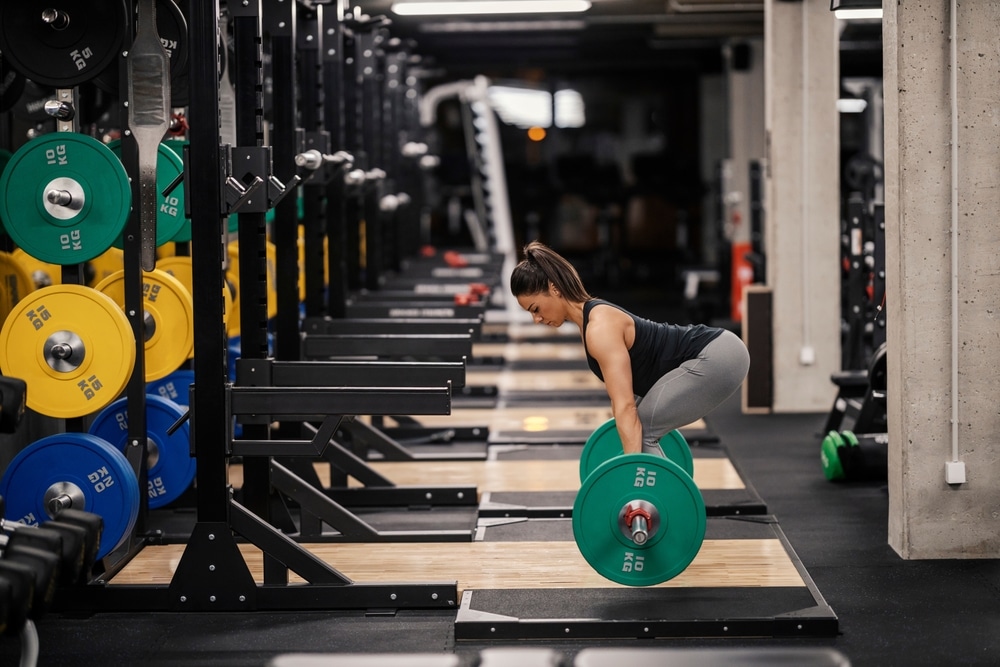
Consider a simple question: if your primary fitness objectives are to increase muscle mass, maintain a lean physique, and stay healthy—and you have no interest in powerlifting competitions or setting world records—is the deadlift actually necessary?
Hardcore lifters often react to this question with disbelief. To them, the deadlift is a non-negotiable pillar of strength training, a “Big Three” lift that engages almost every muscle group simultaneously. On the opposite side, some fitness enthusiasts view the movement as inherently dangerous, claiming it poses an unnecessary risk to spinal health due to complex biomechanical factors.
The truth likely sits in the middle. When executed with proper form and a well-structured program, the deadlift is a potent tool for hypertrophy. However, it also presents specific drawbacks that might make it less than ideal for certain individuals. To determine its value, we must evaluate what actually qualifies an exercise as an effective muscle builder.
Key Factors for a Highly Effective Muscle-Building Exercise
Before deciding if deadlifts belong in your routine, it is essential to understand the criteria that make a movement “good” for hypertrophy. Generally, an exercise must satisfy three specific requirements:
1. Meaningful Tension and Range of Motion for the Target Muscle
Hypertrophy is a localized phenomenon. To trigger growth in a specific muscle, you must subject that muscle to high levels of mechanical tension through a significant number of repetitions. While this sounds straightforward, many popular movements do not provide as much targeted stimulation as people assume.
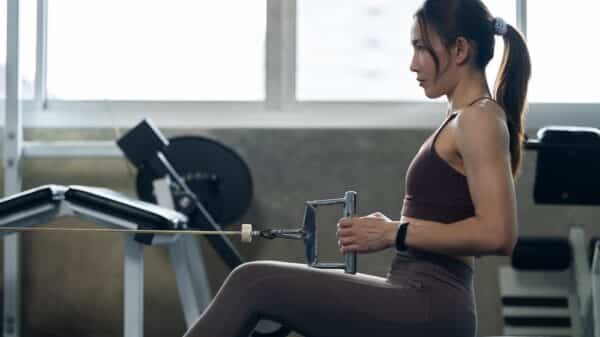
A common misconception is that the deadlift is a primary exercise for building the latissimus dorsi (lats). Because the deadlift involves the back and the lats are located on the back, many assume they are being heavily trained. In reality, while the lats are active during a pull to stabilize the bar, they rarely experience the level of tension required for significant growth. You will likely find more success building your lats through dedicated rowing or pull-down variations.
This illustrates the primary trade-off of compound movements. While they allow you to move heavy loads and involve multiple muscle groups, the stimulus is often diluted. Some muscles work harder than others, and it is frequently difficult to identify which muscle is the “limiting factor” in a set. When you reach failure on a deadlift, was it your grip, your lower back, your hamstrings, or your glutes that gave out? Because it is hard to isolate the fatigue, it is hard to ensure the specific muscle you want to grow is getting the necessary stimulus.
Isolation exercises solve this by focusing tension on a single point. Compound lifts are excellent for overall strength, but they are rarely sufficient on their own for maximizing the growth of every individual muscle group.
2. The Ability to Implement Consistent Progressive Overload
Once your body adapts to a specific weight, that load becomes less effective at driving new muscle growth. To continue seeing results, you must gradually increase the demand placed on your muscles—a concept known as progressive overload.
Some exercises are much easier to progress than others. For example, adding small weight increments to a barbell lift is simple and sustainable for years. Conversely, progressing with bodyweight movements like push-ups becomes increasingly difficult as you get stronger, often requiring complex variations just to maintain the same level of difficulty.
The deadlift excels in this category. It is one of the few movements that allows for consistent, incremental weight increases over a very long period, making it a powerful driver of total-body strength and tension.
3. Alignment with Your Individual Anatomical Structure
Not every exercise is a “one-size-fits-all” solution. Your unique skeletal structure plays a massive role in how an exercise feels and how effective it is for you.
Consider the squat: the depth you can achieve is largely dictated by the anatomy of your hip sockets. Individuals with deeper sockets may find deep squatting uncomfortable or even impossible without compromising their spinal alignment. Those with shallower sockets often find “ass-to-grass” squatting natural and easy. No amount of mobility work can change the shape of your bones, and forcing a range of motion your body isn’t built for is a recipe for injury.
The deadlift is subject to the same anatomical rules. For instance, a lifter with long legs and short arms must pull the barbell over a much greater distance than someone with short legs and long arms. For the long-legged lifter, the movement may feel clunky and awkward, making it harder to maintain form and generate an effective muscle-building stimulus. If a movement doesn’t fit your frame, it will be significantly harder to progress safely.
Final Considerations on Deadlifting for Hypertrophy
Ultimately, the deadlift is a high-reward but high-demand exercise. It passes the test of progressive overload with flying colors and can provide immense tension to the posterior chain. However, its effectiveness for muscle building depends on whether it fits your specific body type and whether you are using it to target the right muscles. If your goal is general aesthetics and health, the deadlift is a valuable option, but it is not a mandatory requirement if other movements better suit your biomechanics and recovery capacity.
Evaluating the deadlift against the primary standards for muscle growth reveals a complex picture of its effectiveness in a hypertrophy program.
The Advantages and Disadvantages of Deadlifting for Hypertrophy
One of the most significant drawbacks of the deadlift for bodybuilders is that it fails to stimulate all involved muscle groups equally. While the movement technically recruits the entire posterior chain—including the glutes, hamstrings, traps, lats, and spinal erectors—it rarely provides a balanced stimulus. Often, the spinal erectors and lower back muscles reach a point of exhaustion first, leaving larger muscle groups like the hamstrings and glutes under-stimulated.
Another limitation involves the range of motion. In a traditional deadlift, many muscles work isometrically or through a very narrow path. For example, while the hamstrings are engaged, they do not experience the same deep stretch and contraction found in a hamstring curl. Similarly, the upper back and lats function primarily as stabilizers; they hold the weight in place without moving through a full eccentric or concentric phase. This isometric tension at short muscle lengths is generally considered less effective for driving muscle growth than exercises that utilize a full range of motion under load.
Biomechanical differences further complicate the exercise. Individuals with specific limb lengths—such as long legs combined with short arms—are forced into a more horizontal torso position. This increases the shear force on the spine and causes the lower back to fatigue even faster, effectively ending the set before the legs or back have been fully challenged. For some, these proportions simply make the deadlift feel awkward or uncomfortable, hindering long-term progress.
The systemic fatigue caused by deadlifting is also a major consideration. Because the movement is so taxing, it carries a higher risk when performed near muscular failure compared to isolation movements. This high level of exertion often requires the deadlift to be placed at the very beginning of a workout, which can leave a lifter too drained to perform subsequent exercises with the necessary intensity. Additionally, during periods of high stress, caloric restriction, or poor sleep, the mental and physical energy required for heavy deadlifting can become a deterrent to consistent training.
Despite these challenges, the deadlift offers several distinct advantages:
- Lower Back Strength: It is an unparalleled movement for developing the spinal erectors. Strengthening these muscles and the surrounding connective tissues may also contribute to better long-term spinal health and a reduction in lower back discomfort.
- Time Efficiency: For those in their first few years of lifting, the deadlift provides a “one-stop shop” for full-body recruitment. Even if the stimulus is not perfectly optimized for every muscle, the sheer load involved can spark significant growth and “newbie gains.”
- General Physical Preparedness (GPP): Deadlifting builds a foundation of total-body coordination, grip strength, and joint durability. This baseline of strength allows athletes to handle more volume and intensity in other parts of their training, which is a key driver of muscle growth over time.
- Psychological Motivation: For many, the simple act of lifting a heavy weight off the floor is inherently rewarding. If an exercise keeps you motivated to return to the gym, it has a place in your routine, provided it is performed with controlled technique.
Is the Deadlift Necessary for Maximum Muscle Growth?
The answer depends entirely on your personal goals and how your body responds to the movement. If your objective is purely aesthetic—building muscle and staying lean without the desire to compete in powerlifting—the deadlift is not a requirement. You can build an impressive physique by replacing deadlifts with more targeted movements like hip thrusts, RDLs, and rows, which may offer a better stimulus-to-fatigue ratio.
However, characterizing the deadlift as “bad” or “dangerous” is inaccurate. When performed with proper form and progressive overload, it can lead to substantial total-body development. It serves as an excellent tool for building a rugged foundation of strength that carries over into all other lifts.
In conclusion, the deadlift is a valuable tool, but it is not mandatory for hypertrophy. If the lift suits your anatomy and you enjoy the challenge, it can remain a staple of your program. If it feels counterproductive, causes persistent discomfort, or leaves you too exhausted to complete the rest of your training, you can safely omit it. As long as you are training your hamstrings, glutes, and back with other effective exercises, you will not miss out on potential muscle gains.