


















Lieutenant General Chris Mohan, the Commanding General of the U.S. Army Materiel Command (AMC), began his military journey nearly four decades ago with a task many veterans know well: peeling potatoes. For Mohan, that humble introduction to the Army kitchen served as a rite of passage, but as his career progressed through multiple combat deployments in Iraq and Afghanistan, he noticed a disconnect. While the Army was rapidly advancing in ballistics, drone technology, and tactical training, the fundamental way it fueled its primary “engine”— the Soldier—had remained largely stagnant for decades.
The realization that nutrition was the missing piece in modern military readiness led to a sweeping overhaul of the Army’s culinary landscape. This shift isn’t just about better-tasting meals; it is a strategic maneuver designed to improve soldier performance, mental health, and long-term force retention.
Why Food Change Was Necessary
In 2018, the Army introduced the Holistic Health and Fitness (H2F) system, a comprehensive approach to human performance centered on five pillars: physical, mental, spiritual, sleep, and nutrition. While the physical training components of H2F were quickly adopted, Mohan observed that the nutrition pillar was lagging. Dining facilities (DFACs) often felt institutional and uninspiring, and the nutritional density of the meals frequently missed the mark for high-performing athletes—which is exactly what modern Soldiers are.
The impact of this neglect wasn’t just physical. Poor dining options were becoming a liability for recruitment and retention. In an era where the military faces stiff competition from the private sector for talent, the quality of daily life matters. Mohan realized that to convince a new generation of Americans to serve, the Army needed to demonstrate a commitment to their well-being that started at the dinner table. As Mohan aptly noted, “We own the moral high ground on this issue.” If the Army expects peak performance, it must provide peak fuel.
Robert Irvine Joins the Cause
Transforming a massive bureaucracy requires more than just a directive; it requires specialized expertise. LTG Mohan sought out world-renowned chef and Food Network personality Robert Irvine to bridge the gap between military logistics and culinary excellence. Irvine, a veteran of the UK’s Royal Navy, had spent twenty years touring military installations and advocating for better food standards. To Irvine, this partnership was the culmination of two decades of “beating the drum” for change.
Working alongside leadership like the now-retired General Randy George and Secretary Dan Driscoll, Mohan and Irvine treated the renovation of Army dining like a high-stakes restaurant turnaround. They didn’t just look at the menu; they looked at the environment. By studying successful university dining halls and commercial restaurants, they redesigned eating spaces to include modern furniture, inviting lighting, and a “campus-style” atmosphere.
Through a partnership with the Compass Group, the Army began piloting a model that replaced the old-school chow line with diverse, chef-driven stations. This wasn’t just a facelift—it was a complete re-engineering of the Soldier’s dining experience, focusing on variety, fresh ingredients, and atmospheric psychology.
The Results Speak for Themselves
The data from these pilot programs has been staggering. At Fort Cavazos (formerly Fort Hood), the “42 Bistro” launched in early 2026 to overwhelming success. In the past, a typical payday weekend might see 200 Soldiers eating on base; after the bistro’s opening, that number skyrocketed to 4,000.
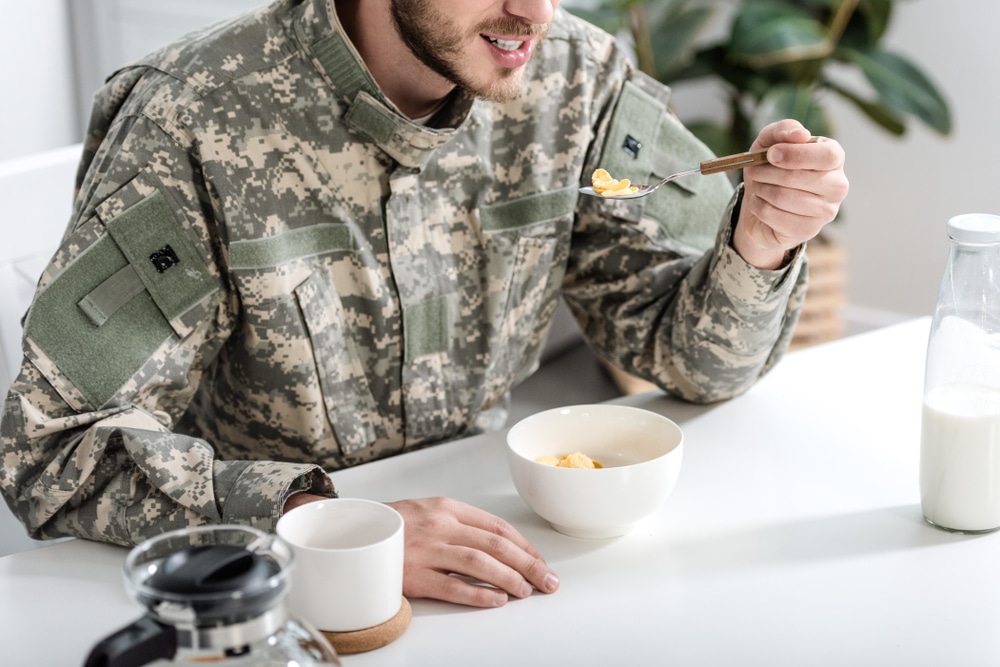
The draw is two-fold: quality and affordability. In an economy where off-post fast food can easily cost $15, the new Army dining model provides high-protein, nutrient-dense meals—like grilled chicken sandwiches with sweet potato fries or customized protein omelets—for roughly five to seven dollars.
Beyond the economics, the “campus-style” dining halls are fostering camaraderie. Soldiers are taking photos of their food, sharing meals with their “squads,” and spending more time building the social bonds that are critical for unit cohesion. Other concepts, like the “Victory Fresh” fast-casual model at Fort Jackson and Fort Gregg-Adams (formerly Fort Lee), provide grab-and-go options that mimic popular healthy chains like Chipotle, ensuring that even on a tight schedule, a Soldier doesn’t have to settle for junk food.
The Goal: Make The Movement Permanent
The revolution is expanding. With new locations like Stack House Bistro at Fort Carson and upcoming venues at Fort Drum and Fort Liberty (formerly Fort Bragg), the Army is moving toward a permanent “food ecosystem” that prioritizes the Soldier’s health.
Mohan and Irvine are looking at the long-term horizon. By instilling better eating habits now, the Army is essentially investing in a “preventative maintenance” program for its people. Healthier soldiers today mean fewer chronic health issues for veterans tomorrow, potentially saving the healthcare system billions of dollars over several generations.
The ultimate goal is to signal to the American public that joining the Army is a path to a healthier, more disciplined lifestyle. By modernizing how it feeds its force, the military is ensuring that its men and women are not just ready to fight, but are equipped with the vitality and longevity to thrive long after their service ends.
The transformation of military dining represents a vital shift in how we view the “human weapon system.” By moving away from industrial-grade chow and toward culinary-forward, nutrient-dense fueling stations, the U.S. Army is proving that excellence on the battlefield begins with excellence in the kitchen. This commitment to holistic health ensures that Soldiers remain the most capable, resilient, and well-cared-for force in the world.