













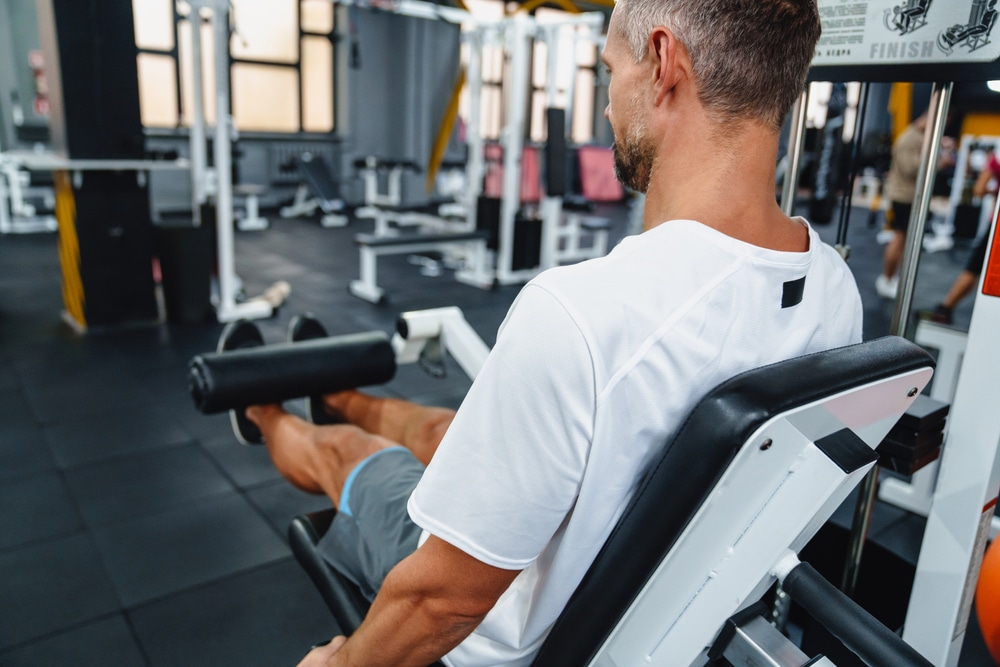
Proper Technique for the Seated Leg Curl
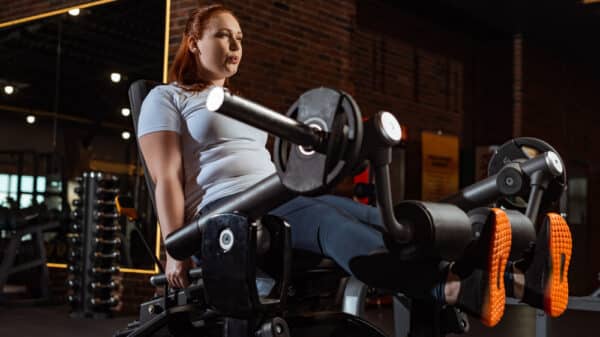
- Position yourself in the machine, ensuring the padded lever rests comfortably against your Achilles tendons. Secure the thigh restraint firmly against your lower quads, and position your seat so your knees extend slightly past the edge of the bench.
- Slide the backrest forward as much as possible. Keeping your torso upright and your thighs pinned securely increases the initial stretch and tension on the hamstring muscles.
- Grasp the side handles to stabilize your upper body. Drive your heels downward and back toward your glutes in a smooth arc, continuing until you reach the machine’s maximum range of motion.
- Hold the peak contraction for a split second before slowly controlling the weight back to the starting position.
Mastering the Lying Leg Curl
- Lie prone on the machine and adjust the lever arm so the roller sits just above your heels, resting on the Achilles tendons.
- Secure your grip on the handles and pull your heels toward your lower back. The movement should continue until your calves make contact with your hamstrings.
- Pause briefly at the top of the movement to maximize muscle engagement, then lower the weight with control until your legs are fully extended.
The Lying Leg Curl with Added Hip Extension
- Begin face-down on the apparatus, positioning the heel pad against your Achilles tendons. You may find that setting the pad slightly lower on the ankle than usual allows for a better range of motion during the hip extension phase.
- Contract your hamstrings to bring your heels toward your glutes until they touch.
- Without releasing the curl, squeeze your glutes forcefully to lift your thighs a few inches off the bench. This additional movement targets the upper portion of the hamstrings near the hip joint.
- Pause at the top, then reverse the sequence: lower your thighs back to the pad first, then slowly extend your knees to return the weight.
Expert Strategies for Maximizing Hamstring Development
- When performing the seated version, keep the thigh pad as tight as possible. You want to feel a distinct stretch in the back of your legs before the set even begins. Maintaining an upright torso, rather than leaning back, tilts the pelvis forward and places the hamstrings in a more mechanically advantageous position for growth.
- Optimize your range of motion by adjusting the pad height based on the variation. For seated curls, use a higher pad setting; for lying curls, a lower setting is often more effective. This ensures the muscle is challenged through its entire functional length.
- Practice “dorsiflexion” by pulling your toes toward your shins during the entire set. Research indicates that this ankle position can lead to significant strength gains—potentially 29% to 59% higher than training with pointed toes. By lengthening the calves, you improve your ability to generate force during knee flexion and can often complete more repetitions per set.
- Do not shy away from the “grind.” The hamstrings respond well to high-intensity effort. Even when the movement speed slows down, most trainees are capable of 2–3 additional repetitions. Pushing through these final reps is often the key to long-term hypertrophy.
The Advantages of Using Leg Curl Machines
Isolation movements like the leg curl are staples in professional strength programs because they offer unique benefits that compound exercises cannot match. While movements like the Romanian deadlift or the traditional deadlift are excellent for the posterior chain, they are often limited by lower back fatigue or grip strength. The leg curl machine removes these bottlenecks, allowing you to train the hamstrings to absolute failure without compromising your spine.
Furthermore, these machines allow for high-intensity training with a lower systemic tax on the central nervous system. This makes them ideal for the end of a workout when you are physically tired but still want to trigger muscle growth. They are also safer to use when training to failure, as there is no risk of a heavy barbell pinning you or causing a loss of form.
Regarding the hip extension variation (often attributed to researcher Lyle McDonald), it is specifically designed to bridge the gap between knee flexion and hip extension. By lifting the thighs at the end of the curl, you engage the glutes and the uppermost part of the hamstrings. If you try this version, you may need a longer pad setting and should expect to use slightly less weight until your coordination improves. If you experience any lower back discomfort with this specific variation, it is perfectly fine to stick with the standard lying leg curl.
Alternative Exercises and Workout Integration
- Barbell Romanian Deadlift (RDL): This is the premier compound movement for the hamstrings. Unlike the leg curl, which focuses on bending the knee, the RDL focuses on hinging at the hip. These two movements should complement each other in a well-rounded routine.
- Barbell Good Morning: This hip-hinge alternative also targets the hamstrings and lower back effectively, providing variety for your posterior chain training.
For optimal results, consider programming the leg curl for 2–3 sets of 6–8 reps, allowing 1–2 minutes of recovery between sets. If you are short on time, leg curls pair exceptionally well in a superset with quad-dominant exercises like leg extensions or the leg press.
Final Takeaways for Hamstring Excellence
Whether you choose the seated or lying variation, the leg curl is a fundamental tool for building strong, defined hamstrings. By focusing on proper setup, utilizing ankle dorsiflexion, and pushing your sets close to failure, you can maximize the effectiveness of every rep. Use the seated version for maximum tension and the lying version for a deep mind-muscle connection. If you are looking for an extra challenge, the hip extension variant offers a unique way to target the glute-ham tie-in. Integrate these movements alongside heavy hip hinges for a complete and powerful posterior chain.
- Barbell Good Morning: This movement mirrors the mechanics of a Romanian Deadlift (RDL), but the resistance is positioned across your upper back rather than held in your hands. Choosing between this and an RDL is largely a matter of personal comfort and preference.
- Dumbbell Romanian Deadlift: This variation provides the same mechanical advantages and challenges as the barbell version but utilizes dumbbells to allow for a different grip or range of motion.
- Glute-Ham Developer (GHD) Raise: While a solid choice for posterior chain strength, the GHD raise can be more difficult to load progressively and may feel less intuitive to perform than a standard leg curl.
- Nordic Hamstring Curl: As one of the most effective bodyweight exercises for the hamstrings, this is an excellent substitute for those without access to machines. While it may not offer the same isolation as a leg curl machine, it remains a highly potent stimulus.
- Reverse Hyper Machine: This machine emphasizes the extension of the hips rather than the bending of the knees. It is a valuable tool for lower back and hip health, though it is less common in standard commercial gyms and focuses on different mechanics than the leg curl.
Optimized Leg Curl Training Programs
The following three routines demonstrate how to integrate leg curls into various training splits to maximize lower body development.
Comprehensive Lower Body Session
Barbell Back Squat: 3 sets | 4–6 reps | 2–3 min rest
Barbell Romanian Deadlift: 3 sets | 4–6 reps | 2–3 min rest
Leg Extension: 3 sets | 6–8 reps | 1–2 min rest
Seated Leg Curl: 3 sets | 6–8 reps | 1–2 min rest
Standing Calf Raise: 2 sets | 8–10 reps | 1–2 min rest
Hamstring-Dominant Strength Routine
Barbell Romanian Deadlift: 3 sets | 4–6 reps | 2–3 min rest
Seated Leg Curl: 3 sets | 6–8 reps | 1–2 min rest
Leg Press: 3 sets | 4–6 reps | 2–3 min rest
Lying Leg Curl: 2 sets | 6–8 reps | 1–2 min rest
Leg Extension: 2 sets | 6–8 reps | 1–2 min rest
Glute-Centric Lower Body Training
Barbell Back Squat: 3 sets | 4–6 reps | 2–3 min rest
Barbell Romanian Deadlift: 3 sets | 4–6 reps | 2–3 min rest
Barbell Hip Thrust: 3 sets | 6–8 reps | 2–3 min rest
Lying Leg Curl (with Hip Extension): 3 sets | 6–8 reps | 1–2 min rest
To ensure consistent progress, employ a double progression model. Aim for the high end of the prescribed rep range while keeping one to two reps in reserve. Once you successfully reach the target reps for your initial set, increase the weight for the subsequent workout.
Seated vs. Lying Leg Curls: Which Is More Effective?
While both variations target the hamstrings through knee flexion, they offer distinct physiological advantages based on the muscle’s starting length.
The seated leg curl is generally considered superior for muscle hypertrophy because it trains the hamstrings in a more lengthened state. In the seated position, your hips are flexed, which stretches the hamstrings over the hip joint before the movement even begins. Research suggests that training muscles at longer lengths leads to greater growth compared to training them in a shortened state.
A study conducted at Ritsumeikan University highlighted this difference, showing that a 12-week program of seated leg curls resulted in approximately 14% muscle growth, compared to just 9% for the lying version. This indicates that the seated variation may produce nearly 50% more muscle gain for the same amount of effort, with significant development occurring in the upper hamstring region near the hips.
However, the lying leg curl remains a valuable tool. It is often easier to stabilize your body on a lying machine, allowing you to focus entirely on the intensity of the contraction. If you have access to both, the seated version should likely be your primary choice, but the lying leg curl can serve as an excellent secondary exercise to provide a different stimulus.
Muscle Anatomy: What the Leg Curl Targets
The leg curl is primarily an isolation exercise for the hamstrings, though it provides secondary stimulation to the glutes and gastrocnemius (calves).
The hamstrings are responsible for two major movements: bending the knee (knee flexion) and extending the hips. Most popular hamstring exercises, such as deadlifts and hip thrusts, focus almost exclusively on hip extension. This leaves a gap in development that only knee flexion exercises can fill.
The hamstring group consists of four muscle heads. Three of these—the long head of the biceps femoris, the semitendinosus, and the semimembranosus—cross both the hip and knee joints. However, the short head of the biceps femoris only crosses the knee. This means it is largely inactive during deadlifts and RDLs. To achieve full hamstring development, you must include a knee flexion movement like the leg curl.
In contrast, the leg extension machine serves as the “antagonist” to the leg curl. While the curl focuses on bending the knee to work the back of the leg, the extension focuses on straightening the knee to target the quadriceps on the front of the thigh.
Advanced Strategies for Hamstring Development
Building strong, resilient hamstrings requires a balance of hip-hinging movements and knee-flexion exercises. By prioritizing the seated leg curl to take advantage of the muscle-stretch reflex and supplementing with variations like the Nordic curl or RDL, you can ensure comprehensive growth and functional strength. Whether your goal is athletic performance or aesthetic symmetry, the leg curl remains a cornerstone of effective lower-body programming.