













How to Perform the Seated Machine Shrug-Back
- Position the seat height so that the top of the chest pad aligns with your upper sternum. Extend your arms to grasp the handles; if the machine allows for adjustments, set the handles far enough forward that they are slightly difficult to reach with fully extended arms.
- Hold the handles firmly but keep your arms and shoulders relaxed. Allow the weight to pull your arms straight and draw your shoulder blades as far forward as possible.
- Keep your gaze fixed straight ahead. Without bending your elbows, pull your shoulder blades backward, squeezing them together with maximum effort.
- Maintain the contraction for a brief moment, then slowly allow the weight to pull your shoulder blades back to the starting forward position.
Execution Guide for the Seated Cable Shrug-Back
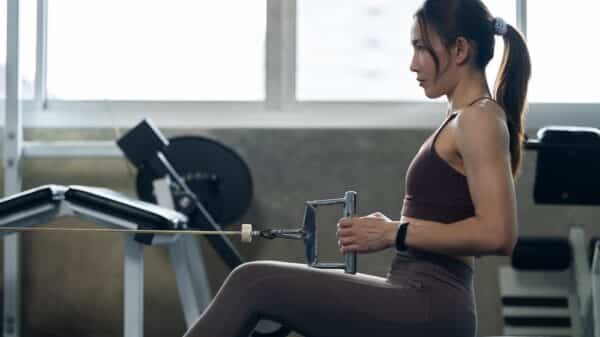
- Attach a V-grip (double-D handle) to a seated row machine. Sit with your feet firmly against the footrests and maintain an upright posture.
- Grasp the handle and allow the weight to pull your arms straight. Let your shoulders move forward into a full stretch while keeping your spine neutral and upright.
- Keeping your arms locked and your torso stationary, retract your shoulder blades toward your spine. Focus on the pinch in the middle of your back without engaging your biceps or bending your elbows.
- Pause at the peak of the contraction, then control the weight as it pulls your shoulders forward to complete the rep.
Mastering the Chest-Supported T-Bar Shrug-Back
- Set the machine’s chest or foot pad so your upper chest rests comfortably against the support, with the top of the pad at the level of your breastbone.
- Take hold of the handles and allow the resistance to pull your arms into a full extension, stretching your shoulder blades forward.
- Maintaining a forward-facing gaze, pull your shoulder blades back and together as hard as possible. Ensure the movement comes entirely from the shoulders and not the arms.
- Hold the squeeze briefly before returning to the initial stretched position under control.
Unilateral Training: The One-Arm Dumbbell Shrug-Back
- Hold a dumbbell in your right hand. Place your left knee and left hand on a flat bench for support. Plant your right foot firmly on the floor and let the dumbbell hang directly toward the ground.
- Allow the weight to pull your shoulder blade down and forward. A slight rotation of the torso toward the floor can help deepen the stretch in the trapezius.
- Keep your back flat and look forward. Retract your right shoulder blade, pulling it back and toward your spine without bending your elbow.
- Pause at the top, then lower the weight back to the starting stretch.
- Complete your set for the right side, then switch your stance and repeat the movement with your left arm.
Expert Tips for Maximizing Trap Development
- Prioritize Range of Motion: The effectiveness of this exercise depends on scapular movement. Focus on getting a deep stretch at the bottom and a full retraction at the top. If your shoulder blades aren’t moving significantly, your traps aren’t doing the work. Periodic video recording can help verify that you are achieving full scapular retraction.
- Eliminate Bicep Involvement: The goal is to isolate the traps. Keep your arms completely straight; bending the elbows shifts the load to the biceps and away from the intended target.
- Utilize a Thumbless Grip: Using a “suicide grip” (thumbs on the same side as your fingers) can help minimize the urge to pull with your arms, making it easier to focus on the movement of the shoulder blades.
- Maintain Torso Stability: Avoid using momentum or “body English” to move the weight. Keeping your chest glued to the support pad ensures that the rhomboids and middle traps are performing the heavy lifting.
- Check Your Head Position: Keep your head neutral or tilted slightly upward. Looking down often causes the chest to collapse, which restricts the shoulder blades from retracting fully.
- Move Horizontally, Not Vertically: Unlike a standard shrug where you move your shoulders toward your ears, the shrug-back requires you to pull your shoulders straight back and together.
- Maintain Constant Tension: Adjust the machine or your starting position so that the weight stack does not touch down between reps. Keeping the traps under tension throughout the set yields better results.
- Don’t Let Grip Limit Growth: If your forearms give out before your back muscles are fatigued, use lifting straps to ensure you can take the traps to the point of failure.
The Role of Shrug-Backs in Upper Back Hypertrophy
The shrug-back is arguably the most effective isolation movement for the trapezius. Because it functions as a row without the arm pull, it removes the common “weak links”—the biceps and rear deltoids—that often fail before the back is fully stimulated. Furthermore, using a chest-supported variation removes lower-back fatigue from the equation, allowing for total focus on the mid-traps and rhomboids.
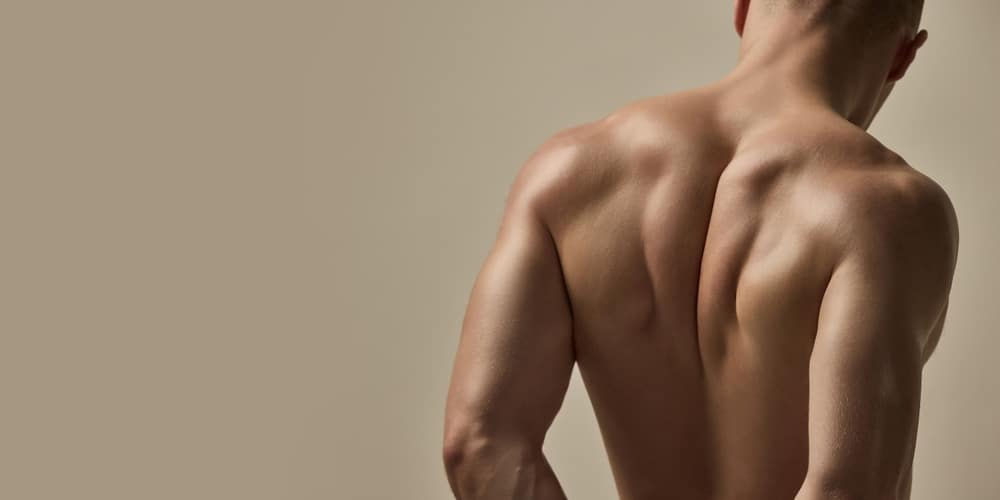
The primary anatomical function of the middle trapezius fibers is scapular retraction—the act of pulling the shoulder blades toward the spine. The shrug-back targets this specific function more directly than almost any other exercise.
To build a truly three-dimensional back, it is important to understand that the traps are a complex muscle group with fibers running in different directions. For comprehensive development, you should balance your routine by combining different movements:
- Upper Traps: Targeted through scapular elevation (standard barbell or dumbbell shrugs).
- Middle Traps: Targeted through scapular retraction (shrug-backs).
- Lower Traps: Targeted through scapular depression (controlled pulldowns focusing on pulling the blades down).
Strategic Programming
There are two primary ways to incorporate shrug-backs into your training. You can perform them as a standalone isolation exercise or use them as a high-intensity “finisher” immediately following your standard rowing sets. Using them as a finisher is particularly effective because your traps often have remaining strength even after your biceps are too fatigued to complete a full row. For example, after reaching technical failure on a seated machine row, you can immediately transition into shrug-backs to exhaust the traps completely before resting.
Summary and Final Takeaway
The shrug-back (or straight-arm row) is an essential tool for anyone looking to increase back thickness and improve scapular health. By removing arm involvement, you can isolate the middle traps and rhomboids with significantly more weight and precision than through traditional rows alone. Whether used as a primary movement or a set finisher, focusing on a full stretch and a hard squeeze of the shoulder blades is the key to unlocking new growth in the upper back. For the best results, ensure your torso remains stable and your arms stay locked, forcing the traps to handle the entire load.
Integrating the shrug-back into your training routine can be done efficiently using a rest-pause method. After completing a standard set of rows, take a brief 20-second break to recover your breath and grip strength, then immediately perform a set of shrug-backs until you reach technical failure. This approach maximizes intensity without significantly extending your time in the gym.
The placement of this exercise depends on your specific hypertrophy goals. If your primary objective is to prioritize trap development, perform shrug-backs early in your session—ideally before seated machine rows—while your muscles are at their freshest. Conversely, if you are seeking balanced growth across your lats, rear deltoids, arms, and traps, it is better to perform them after your primary rowing movements. When used as an independent exercise, aim for 3 sets of 8–10 repetitions, resting for 1 to 2 minutes between sets to ensure high-quality muscle contractions.
Equipment choice often comes down to availability and personal comfort. Seated machine rows and chest-supported T-bar rows are highly recommended because the chest pad stabilizes the torso, effectively removing the lower back as a limiting factor. If these aren’t available, the seated cable version is a viable alternative, though it demands more significant core and lower-back stability. One-arm dumbbell shrug-backs are useful for those with limited equipment, though they are less time-efficient and put a higher demand on the stabilizing arm and lower back.
Comparable Exercises for Middle Trap Training
- Chest-Supported Dumbbell Shrug-Back (Kelso Shrug): Performed face-down on an incline bench, this variation involves retracting the shoulder blades without bending the elbows. It is an excellent option for home gyms, though it can be harder to progress with small weight increments and may involve more upper-trap recruitment than machine variations.
- Seal Row Shrug-Back: This movement involves lying face-down on a specialized elevated bench using a barbell. While highly effective for isolation, many lifters find the range of motion somewhat restricted, and the specific equipment required is not found in every commercial gym.
- Seated Cable Row: Standard horizontal rows are fundamentally multi-joint movements that heavily recruit the middle traps during the initial scapular retraction phase. This exercise provides the added benefit of training the lats, biceps, and rear deltoids simultaneously.
- One-Arm Dumbbell Row: Similar to the cable row, this builds the middle traps through retraction but requires more effort from the lower back and core to maintain a stable position.
Example Training Splits Including the Shrug-Back
Below are three ways to program the shrug-back into your existing routine based on your training focus:
Targeted Trap Hypertrophy Routine
- Seated Cable Shrug-Back: 3 sets of 8–10 reps (1–2 min rest)
- Seated Cable Row: 3 sets of 6–8 reps (2–3 min rest)
- V-Grip Lat Pulldown: 3 sets of 6–8 reps (2–3 min rest)
- Barbell Shrug: 3 sets of 8–10 reps (1–2 min rest)
Comprehensive Pull Day Session
- Barbell Deadlift: 3 sets of 4–6 reps (2–3 min rest)
- One-Arm Dumbbell Row: 3 sets of 6–8 reps (2–3 min rest)
- Seated Machine Shrug-Back: 3 sets of 8–10 reps (1–2 min rest)
- Lat Pulldown: 3 sets of 8–10 reps (2–3 min rest)
- Alternating Dumbbell Curl: 3 sets of 8–10 reps (2–3 min rest)
Trap-Centric Upper-Body Split
- Chin-Up: 3 sets of 4–6 reps (2–3 min rest)
- Seated Cable Row: 3 sets of 6–8 reps (2–3 min rest)
- Seated Cable Shrug-Back: 3 sets of 8–10 reps (1–2 min rest)
- Machine Chest Press: 3 sets of 6–8 reps (2–3 min rest)
- Barbell Shrug: 3 sets of 8–10 reps (1–2 min rest)
Optimizing Your Progress
To maximize muscle growth, implement a double progression strategy. Start with a weight that allows you to hit the lower end of the recommended rep range while maintaining 1–2 reps in reserve. Once you can successfully complete the maximum number of repetitions in your first set with perfect form, increase the resistance for your next workout. This ensures consistent mechanical tension, which is the primary driver for muscle hypertrophy.
Final Thoughts on Shrug-Back Training
The shrug-back is a specialized movement designed to isolate the middle traps and improve scapular control. By focusing on controlled retraction and using stable equipment like chest-supported machines, you can develop a thicker, more defined upper back while minimizing lower-back strain. Whether integrated as a finisher through rest-pause sets or used as a primary accessory movement, consistency and progressive overload remain the most important factors for seeing visible results in your trap development.
Understanding Our Shipping Policies and Order Thresholds
Maintaining a sustainable business model requires a careful balance between providing value to customers and managing the high costs of logistics. You may notice a specific minimum purchase requirement to qualify for free shipping. This threshold exists because processing and transporting individual, single-item orders is significantly more expensive than shipping multiple items together. When an order contains only one product, the narrow profit margins are often consumed entirely by postage and handling fees.
By encouraging larger orders, we can consolidate shipping costs. When you add a second or third item to your cart, the incremental cost of shipping increases only slightly compared to the cost of the initial package. This efficiency allows us to absorb the shipping fees on your behalf while remaining a viable company. We appreciate your understanding and patronage as we strive to deliver high-quality health products without compromising our operational stability.
Exclusive Rewards for Returning Community Members
We value the loyalty of our customers and are always eager to welcome you back to your fitness journey. To support your continued progress, we occasionally offer specialized incentives, such as a 20% discount on subsequent orders. By using dedicated promotional codes at checkout, such as COMEBACK20, you can access immediate savings on your favorite supplements and health tools. These offers are designed to make it easier for you to maintain the consistency required to reach your physical and wellness goals.
Streamlined Payment Options with Interest-Free Installments
Investing in your health is a priority, but we recognize that managing cash flow is equally important. To provide more flexibility, we offer payment solutions that allow you to divide your total purchase into four equal installments. These payments are distributed over a six-week period and are interest-free, ensuring that you can receive your products immediately without a significant upfront financial burden. This process typically involves a 25% payment at the time of purchase, followed by subsequent 25% payments every two weeks.
The process is seamless: simply select the installment option at checkout, complete a brief sign-up or login, and your order will be processed according to our standard shipping policies. This approach helps you maintain your health regimen while keeping your budget on track.
User Safety and Legal Liability Guidelines
Participation in any fitness or nutrition program involves inherent risks. When utilizing our products, coaching, or exercise routines, it is essential to acknowledge that physical activities—including strength training, cardiovascular work, and flexibility exercises—can be strenuous and may lead to injury if not performed correctly. By choosing to use these services, you assume personal responsibility for your health and safety.
Our resources are intended for educational and supplemental purposes and are not designed to diagnose, treat, or manage specific medical conditions. We strongly advise all individuals to undergo a comprehensive physical examination and consult with a qualified healthcare provider before beginning any new supplement or exercise program. Whether you seek professional medical clearance or choose to proceed independently, you accept full responsibility for the outcomes of your fitness journey. Please note that individual results may vary, and we cannot guarantee specific physiological changes or performance milestones.
Managing Inventory and Subscription Updates
We strive to keep our most popular products in stock at all times; however, high demand can occasionally lead to temporary unavailability. We encourage users to stay connected through our digital platforms to receive real-time updates on inventory and new releases. Once you have successfully subscribed to our updates, you will be among the first to know when products are restocked or when new formulations become available. If you find you are already on our list, you can rest assured that you are already set to receive these important notifications.
Our Rigorous Standards for Scientific Accuracy
In an industry often clouded by misinformation, we prioritize transparency and academic integrity. Every piece of content we publish—from articles to multimedia—undergoes a comprehensive review by our Scientific Review Board. This team is comprised of credentialed experts, including medical doctors, registered dietitians, molecular biologists, and PhDs. Their primary role is to ensure that our information is current, evidence-based, and trustworthy.
These professionals leverage their academic backgrounds to access and analyze research from the world’s most respected scientific journals. This allows us to look beyond individual studies and evaluate the totality of the evidence regarding nutrition, supplementation, and exercise science. Our goal is to provide you with a reliable foundation of knowledge so you can make informed decisions about your health. If you ever encounter information you believe is outdated or inaccurate, we welcome your feedback to help us maintain these high standards.
A Multi-Step Framework for Evidence-Based Content
To maintain scientific integrity, we follow a strict editorial protocol. The process begins with our research associates, who gather the latest proven data on a given topic. This research then serves as the foundation for our editorial team to develop practical outlines and drafts. The final and most critical step is the expert review phase, where our Scientific Review Board scrutinizes every claim to ensure it is supported by high-quality data and explained with absolute clarity. This multi-layered approach ensures that the advice we provide is not only practical but also deeply rooted in established science.
Summary of Key Takeaways
Our commitment to your health journey extends beyond providing premium supplements; it encompasses financial flexibility, logistical transparency, and unwavering scientific accuracy. By understanding our shipping thresholds and utilizing flexible payment options, you can better manage the costs of your wellness routine. Most importantly, we emphasize the necessity of personal responsibility and medical consultation when starting any new fitness plan. By grounding our content in a rigorous, multi-step scientific review process, we ensure that you have access to the most reliable, evidence-based information to support your long-term physical success.