















Step-by-Step Instructions for Perfect Execution
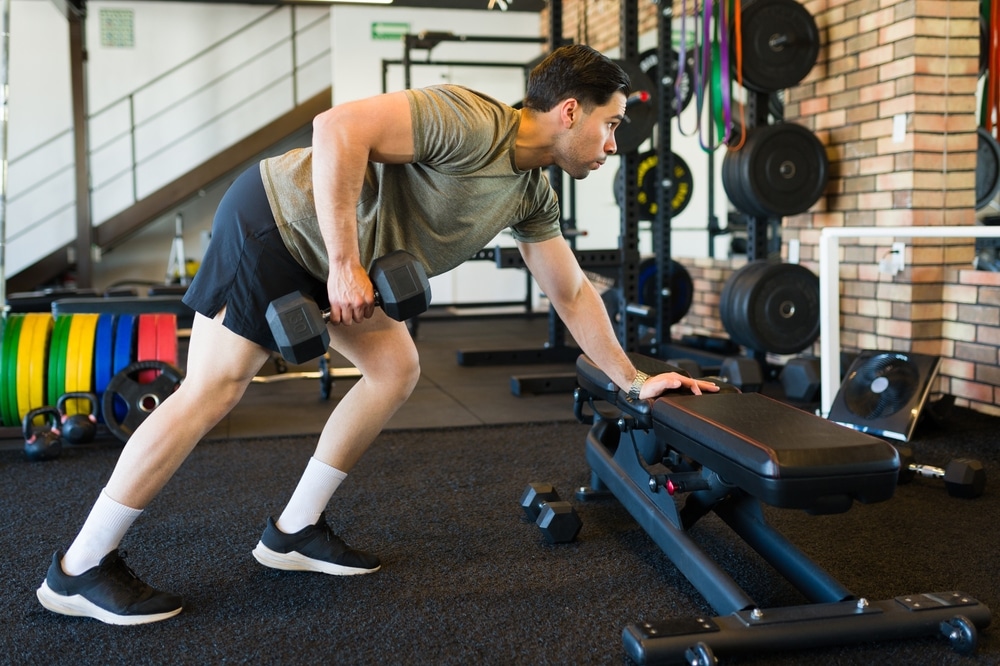
- Begin by grasping a dumbbell in your right hand. To create a stable base, place your left hand and left knee firmly on a flat gym bench. Position your right foot on the ground approximately one to two feet away from the bench, allowing your right arm to hang naturally toward the floor.
- Start the movement by allowing the weight to pull your shoulder blade forward into a full stretch. A slight rotation of the torso can help maximize this range of motion.
- Maintaining a flat back and a neutral gaze, initiate the pull by retracting your right shoulder blade as far back as possible without bending your elbow yet.
- Once the shoulder blade is fully retracted, pull the dumbbell toward your hip or lower torso. Focus on driving your elbow toward the ceiling while keeping it tucked close to your side.
- After the dumbbell makes light contact with your torso, slowly lower the weight back to the starting position, allowing the shoulder blade to protract fully at the bottom.
- Complete the set for your right side before switching to the left arm and repeating the process.
Professional Strategies for Better Back Gains
- Cue Your Movement: To better engage the target muscles, visualize driving your elbow toward the ceiling rather than just pulling with your hand. Squeezing the dumbbell handle tightly can also improve force production.
- Utilize the Valsalva Maneuver: Take a deep breath into your core and hold it throughout the duration of the rep. This internal pressure provides stability to your spine, which is more effective than breathing mid-repetition.
- Find Your Stability: While the “knee-and-hand-on-bench” setup is standard, you can also perform this exercise by bracing against a dumbbell rack or any sturdy, elevated surface if benches are occupied. Ensure your torso remains nearly parallel to the floor.
- Don’t Let Grip Limit Growth: As you progress to heavier weights, your grip may fail before your back muscles do. Using weightlifting straps is a practical solution that allows you to continue applying progressive overload to the larger muscles of the back without being held back by forearm fatigue.
- Understand the Resistance Curve: This exercise is naturally easiest at the bottom and most difficult at the very top. Because of this, using a small, controlled amount of momentum to finish the final inches of a heavy rep is acceptable, provided it doesn’t compromise your overall safety or form.
- Prioritize Symmetry: To manage muscle imbalances, start each set with your weaker side. Match the number of repetitions on your stronger side rather than exceeding them, which helps the trailing side catch up over time.
Why the One-Arm Row is an Essential Back Builder
The single-arm dumbbell row stands out as one of the most productive exercises for developing a strong, muscular back. It is a versatile movement that effectively targets the latissimus dorsi (lats), trapezius, rhomboids, rear deltoids, and biceps simultaneously. Because it allows for a significant range of motion and easy incremental weight increases, it is a staple for both strength and hypertrophy goals.
One of the primary advantages of the unilateral (one-sided) approach is the ability to focus on the mind-muscle connection. It also helps identify and correct strength discrepancies between sides. Furthermore, the dumbbell row is often more “back-friendly” than the barbell row; because one arm is used for bracing, there is significantly less shear stress on the lower back. This ensures that the set ends when your primary pulling muscles are fatigued, rather than when your lower back gives out.
Interestingly, many lifters find they can move more total weight using a single dumbbell than they can with a barbell. This “bilateral deficit” means that if you can barbell row 150 pounds, you might find you can handle 80-pound dumbbells individually. While this extra loading capacity is a benefit, it isn’t the only reason to choose this movement.
The main limitations to consider are the availability of heavy enough dumbbells in some commercial gyms and the potential for large “jumps” between weight increments. However, if your equipment allows for small increases and you have access to a wide weight range, this exercise is hard to beat. For most routines, 3 sets of 6 to 8 reps per arm—resting 2 to 3 minutes between sets and stopping 1 to 2 reps shy of total failure—is an ideal starting point.
Highly Effective Row Alternatives
- Seated Machine Row: This is a premier alternative that offers a fixed path and a consistent resistance curve. It isolates the upper back and lats while removing the lower back from the equation entirely.
- T-Bar Row: A classic for building thickness. The chest-supported version is particularly effective as it prevents the lower back from becoming the limiting factor in the set.
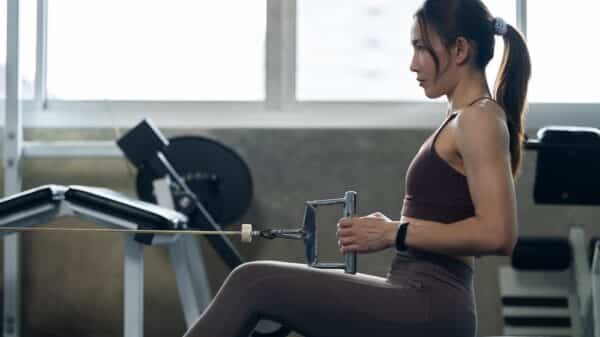
- Seated Cable Row: Using a cable provides constant tension throughout the movement. It is excellent for hypertrophy, though it still requires some lower back stabilization compared to chest-supported machines.
- Chest-Supported Dumbbell Row: By lying face-down on an incline bench, you eliminate the need to stabilize your torso. This allows for pure isolation of the back muscles, though it may slightly restrict your range of motion compared to the standing version.
- Barbell Row: While more technically demanding and taxing on the lower back, the barbell row allows for the use of the most absolute weight and very small loading increments (using micro-plates), making it a foundational strength movement.
Final Takeaway for Your Routine
The one-arm dumbbell row is a cornerstone of effective back training, offering a unique blend of safety, range of motion, and heavy loading potential. By focusing on a strong stretch and driving the elbow back, you can effectively stimulate the lats, traps, and rhomboids. Use it as a primary pulling movement to build a balanced, powerful physique, and don’t be afraid to use straps or slight momentum as you move into advanced weight ranges to ensure your back receives the necessary stimulus for growth.
- Meadows Row: Named after the late bodybuilder John Meadows, this variation involves using a landmine setup or a barbell in a corner. It is an excellent choice if you have reached the maximum weight of your gym’s dumbbells. While the thick end of the barbell can be difficult to hold, utilizing lifting straps effectively solves the grip issue, allowing you to focus on the heavy pull.
- Barbell Seal Row: This movement requires lying prone on an elevated bench, which completely eliminates the lower back as a limiting factor and prevents the use of momentum. Although it is a superior way to isolate the back muscles, it can feel clunky to set up, and many commercial gyms lack the specialized high bench required to achieve a full range of motion.
- Kroc Row: These are high-intensity, single-arm rows performed with heavy weights and a touch of body momentum. While they allow for significant loading, the slightly flared elbow position and shortened range of motion mean they do not offer distinct advantages over the stricter, standard one-arm dumbbell row for most lifters.
- Inverted Bodyweight Row: A solid foundational movement, the inverted row is a great substitute when external weights aren’t available. However, because it relies on your body weight, it is significantly harder to apply progressive overload compared to dumbbell variations, making it less efficient for long-term hypertrophy and strength gains.
- Bent-Over Two-Arm Dumbbell Row: This exercise mimics a traditional barbell row but uses two dumbbells simultaneously. It typically proves to be more cumbersome than beneficial, as the lack of a stable support point makes it difficult to maintain proper form and balance. Most trainees find better results by sticking to either a barbell or a supported single-arm row.
Effective Training Routines for Single-Arm Dumbbell Rows
The single-arm dumbbell row is a versatile movement that fits seamlessly into various training splits. Below are three examples of how to integrate this exercise into your weekly routine to maximize back development and strength.
Integrating Rows into a Pull-Day Session
Barbell Deadlift: 3 sets | 4–6 reps | 2–3 min rest
One-Arm Dumbbell Row: 3 sets | 6–8 reps | 2–3 min rest
Lat Pulldown: 3 sets | 6–8 reps | 2–3 min rest
Barbell Curl: 3 sets | 6–8 reps | 1–2 min rest
Upper-Body Balanced Routine
Barbell Bench Press: 3 sets | 4–6 reps | 2–3 min rest
One-Arm Dumbbell Row: 3 sets | 6–8 reps | 2–3 min rest
Seated Dumbbell Shoulder Press: 3 sets | 6–8 reps | 2–3 min rest
Lat Pulldown: 3 sets | 6–8 reps | 2–3 min rest
Dumbbell-Only Pull Day
Dumbbell Romanian Deadlift: 3 sets | 6–8 reps | 2–3 min rest
One-Arm Dumbbell Row: 3 sets | 6–8 reps | 2–3 min rest
Dumbbell Pullover: 3 sets | 8–10 reps | 1–2 min rest
Hammer Curl: 3 sets | 8–10 reps | 1–2 min rest
To ensure consistent progress with these workouts, employ a “double progression” strategy. Choose a weight that places you in the target rep range while keeping one to two reps in reserve (avoiding total failure). Once you can successfully hit the maximum number of reps in your first set, increase the weight for your next session to continue challenging the muscles.
Primary Muscles Targeted by the One-Arm Row
The one-arm dumbbell row is a powerhouse movement for developing the posterior chain. It primarily targets the large muscles of the back that contribute to thickness and width.
The specific muscles that experience the most stimulation include:
- Latissimus Dorsi (Lats): The large wing-like muscles on the sides of your back.
- Middle Trapezius: The center portion of your traps that helps with scapular retraction.
- Rhomboids: The muscles located between your shoulder blades.
- Teres Major: Often called the “little lat,” this muscle assists in arm movement and back thickness.
While the back muscles are the primary drivers, your biceps and brachialis provide significant assistance during the pulling phase. Additionally, your rear deltoids contribute to the motion, while the forearms are heavily taxed to maintain a strong grip. To keep your body stable and your spine neutral during the lift, the teres minor, infraspinatus, and spinal erectors act as essential stabilizers throughout the set.
Summary of Benefits and Progression
The one-arm dumbbell row remains a staple in strength training because it allows for a deep stretch and a powerful contraction while minimizing the strain on the lower back compared to bilateral rows. By focusing on controlled repetitions and utilizing a variety of programming options—whether in a pull-focused day or a full upper-body split—you can effectively build a stronger, more symmetrical back. Remember that consistent progression, through either increased weight or additional repetitions, is the key to unlocking the full hypertrophic potential of this exercise.
Understanding the economics of e-commerce shipping is essential for providing high-quality health supplements at competitive prices. A shipping threshold, such as a $299 minimum, is established to balance the high logistics costs associated with small, single-item orders. When a customer purchases a single product, the overhead for packaging and transportation often consumes the majority of the profit margin. By consolidating multiple items into a single shipment, the incremental cost of delivery remains low, allowing for a more sustainable business model that can continue to invest in premium ingredients and research. This approach encourages bulk purchasing, which is often more convenient for long-term fitness goals and reduces the overall environmental impact of frequent deliveries.
Special Incentives for Returning Community Members
Maintaining a consistent fitness regimen is a long-term commitment, and we value the loyalty of those returning to their health journey. To support your progress, returning customers can access an exclusive 20% discount on their next order. By applying the promotional code COMEBACK20 at checkout, athletes can secure significant savings on their favorite supplements, making it easier to restock on essential nutrients and performance boosters.
To make premium health products more accessible, we offer flexible payment solutions through Sezzle. This service allows you to divide your total purchase into four equal, interest-free installments distributed over a six-week period. This financing option does not impact your credit score. The payment structure is straightforward: an initial 25% payment is made at the time of purchase, followed by 25% installments every two weeks. This enables you to receive your supplements immediately while managing your budget over time. Simply select the flexible payment option during the checkout process to be redirected for a quick sign-up or login.
Comprehensive Waiver and Health Responsibility Agreement
Participating in fitness programs, nutrition plans, or using specialized supplements involves inherent physical risks. By utilizing these services and products, individuals acknowledge that they are voluntarily engaging in activities—such as strength training, cardiovascular exercise, and flexibility work—that carry a risk of injury. It is a standard industry practice to release the provider from liability regarding physical or metabolic disorders that may arise during the pursuit of fitness goals.
It is strongly recommended that all individuals undergo a thorough physical examination and consult with a qualified healthcare provider before starting any new exercise or supplementation protocol. Success in health and fitness is highly individual; therefore, specific results cannot be guaranteed. Users assume full responsibility for their health decisions, whether they choose to seek medical advice or proceed independently.
Product Availability and Stock Notifications
High demand for premium, evidence-based supplements can occasionally lead to inventory shortages. When a product is listed as out of stock, it is often due to our commitment to sourcing only the highest quality raw materials, which may have limited seasonal availability. Customers are encouraged to subscribe for updates to be notified immediately when their preferred items are replenished.
Verification Protocols for Site Security
To maintain the integrity of our digital platform and protect user data, we employ automated security checks. These protocols help prevent unauthorized bot activity and ensure a safe shopping environment for all customers. If prompted, completing a simple verification checkbox confirms a human interaction and allows for uninterrupted access to our health resources and store.
Our Professional Fact-Checking Standards
In an era of health misinformation, scientific accuracy is our highest priority. Every piece of content, including articles and educational media, undergoes a rigorous review by a Scientific Review Board. This board consists of credentialed experts, including nutritionists, dietitians, molecular biologists, and medical doctors. These professionals utilize their academic backgrounds and access to prestigious medical journals to ensure that every claim is supported by the current weight of scientific evidence. We aim to provide a trustworthy resource for anyone looking to improve their physical well-being through data-driven insights.
A Scientific Approach to Evidence-Based Wellness
Our content creation process is designed to meet the highest standards of scientific integrity and practical utility. The workflow begins with dedicated research associates gathering the most recent and proven scientific data. This research is then translated by our editorial team into clear, actionable guides. The final step involves a peer-review process by our scientific board to verify that all information is explained precisely and backed by high-quality studies. This multi-step methodology ensures that the advice you receive is not only easy to understand but also fundamentally sound.
Summary: Prioritizing Quality, Transparency, and Safety
Navigating the world of health and fitness requires a balance of economic sustainability, rigorous scientific standards, and personal responsibility. By understanding shipping logistics, utilizing flexible payment options, and relying on fact-checked, evidence-based research, you can make informed decisions that support your long-term wellness. Always remember to prioritize safety by consulting with medical professionals and choosing products backed by transparent, peer-reviewed processes.